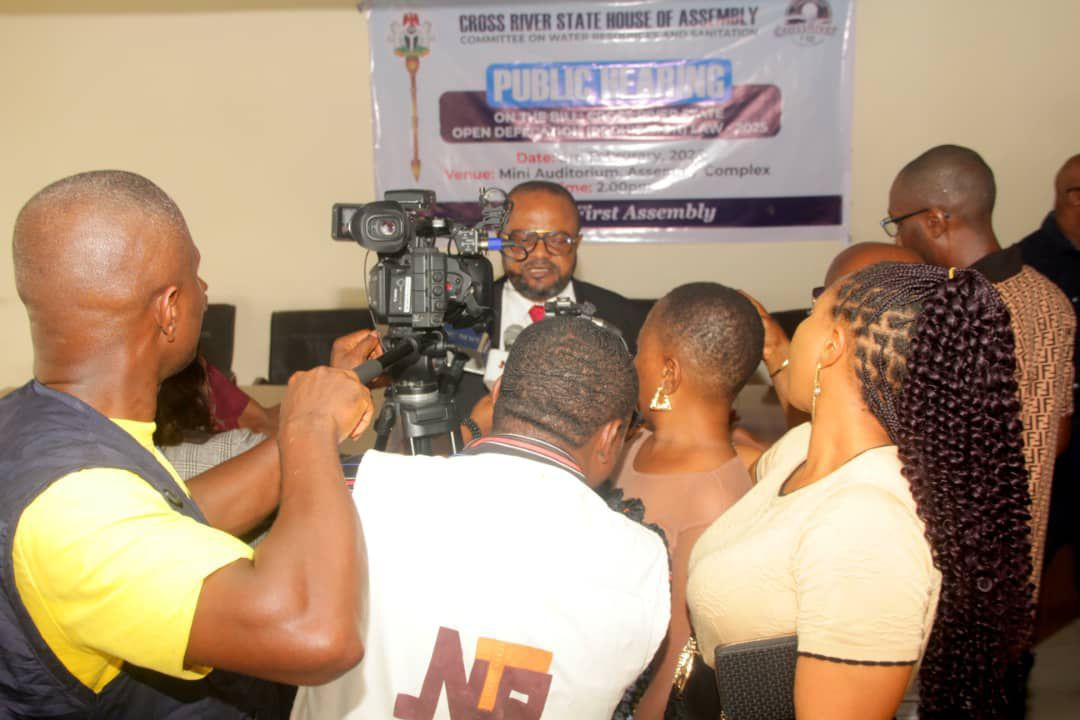
The Cross River State House of Assembly has recorded a major stride in its drive to improve public health and environmental sanitation with the successful conduct of a public hearing on the proposed Cross River State Open Defecation Prohibition Law.
The landmark bill, sponsored by Hon. Kingsley Ntui Isong, Member representing Etung State Constituency and Chairman, House Committee on Water Resources and Sanitation, is aimed at ending the practice of open defecation across the state and promoting safe, dignified, and hygienic living conditions for residents.
Presiding over the public hearing, Hon. Isong said the proposed legislation was conceived in response to the urgent need to tackle sanitation-related health risks, environmental degradation, and the loss of human dignity associated with open defecation.
“The law seeks to prohibit open defecation in all parts of Cross River State, promote proper hygiene practices, protect the environment from contamination, and reduce the spread of diseases linked to poor sanitation,” he explained.
According to the sponsor, the bill also encourages the construction and proper use of toilet facilities in homes, schools, markets, and public spaces, in line with national and global efforts to achieve an Open Defecation Free (ODF) society.
Continuing, Hon. Isong assured stakeholders that their inputs would not be treated lightly.
“This law is not designed to punish citizens, but to protect lives, preserve our environment, and ensure that Cross River State meets global sanitation standards,” he stated.
He further emphasized that all memoranda, submissions, and recommendations from the hearing would be carefully reviewed and incorporated where necessary to produce a comprehensive, effective, and people-friendly sanitation law.
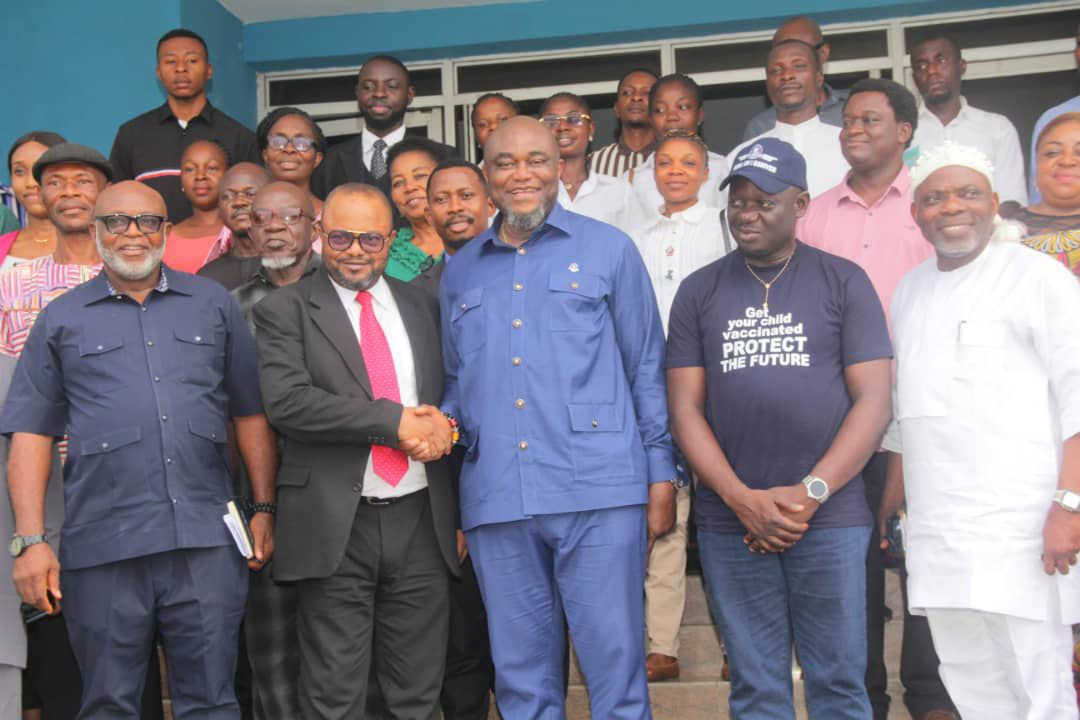
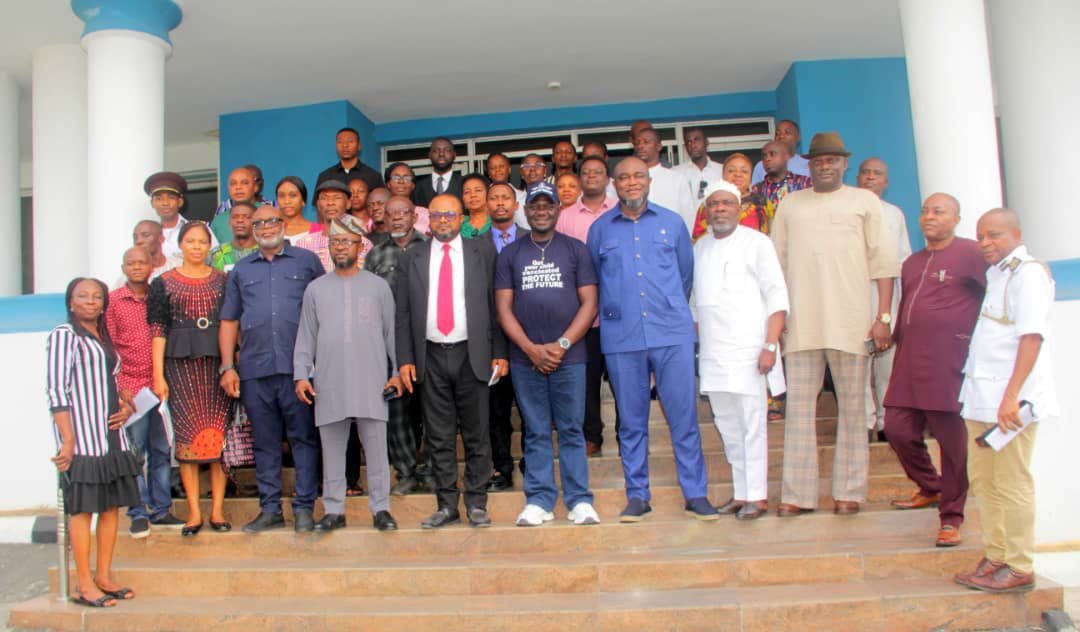
The public hearing attracted wide participation from critical stakeholders, including representatives of the Ministry of Water Resources and Sanitation, Ministry of Information, health professionals, local government officials, traditional rulers, community leaders, civil society organizations, environmental experts, and members of the general public.
Participants commended the House of Assembly for the initiative, describing open defecation as a persistent challenge affecting both rural and urban communities. They noted its negative impact on water quality, disease control, tourism potential, environmental sustainability, and overall public health.
During the interactive session, stakeholders made far-reaching recommendations to strengthen the proposed law. These included increased government investment in public toilet infrastructure, sustained community awareness and behavioural change campaigns, support for low-income households to build basic sanitation facilities, strict but humane enforcement mechanisms, and stronger collaboration among government agencies, NGOs, and development partners.
The public hearing, which was fully coordinated by the House Committee on Water Resources and Sanitation under Hon. Isong’s leadership, marks a significant milestone in the legislative journey toward transforming sanitation practices in Cross River State.
With the conclusion of the hearing, the House of Assembly is expected to consider stakeholders’ inputs and proceed with further legislative action toward the passage of a law that will enhance public health, protect the environment, and promote a cleaner, healthier Cross River State.