The Cross River State Government has firmly clarified that its renewed pursuit of littoral status is not a claim to any territory belonging to its neighboring Akwa Ibom State, but a legitimate effort grounded in scientific data and national interest.
The Special Adviser on Public Affairs to Governor Bassey Otu, Mr. Nsa Gill, made this known during a media briefing, stressing the need to dispel what he described as growing politicization of the issue by some elders in Akwa Ibom. He emphasized that Cross River’s position goes beyond past judicial pronouncements and rests on verifiable technical findings.
Mr. Gill explained that while the 2012 ruling of the Supreme Court of Nigeria addressed the allocation of oil wells, it did not extinguish Cross River’s geographical and maritime realities. He noted that the continued existence of Bakassi Local Government Area within Cross River State, with access to the Gulf of Guinea through the Cross River Estuary, forms a critical basis for the state’s littoral argument.
He further referenced the 2002 judgment of the International Court of Justice, which ceded parts of the Bakassi Peninsula to Cameroon. According to him, the ruling did not transfer all portions of Bakassi, nor did Nigeria cede any oil wells to Cameroon. He questioned why, if no oil wells were ceded internationally, Cross River should be denied entitlements historically associated with its coastal status.
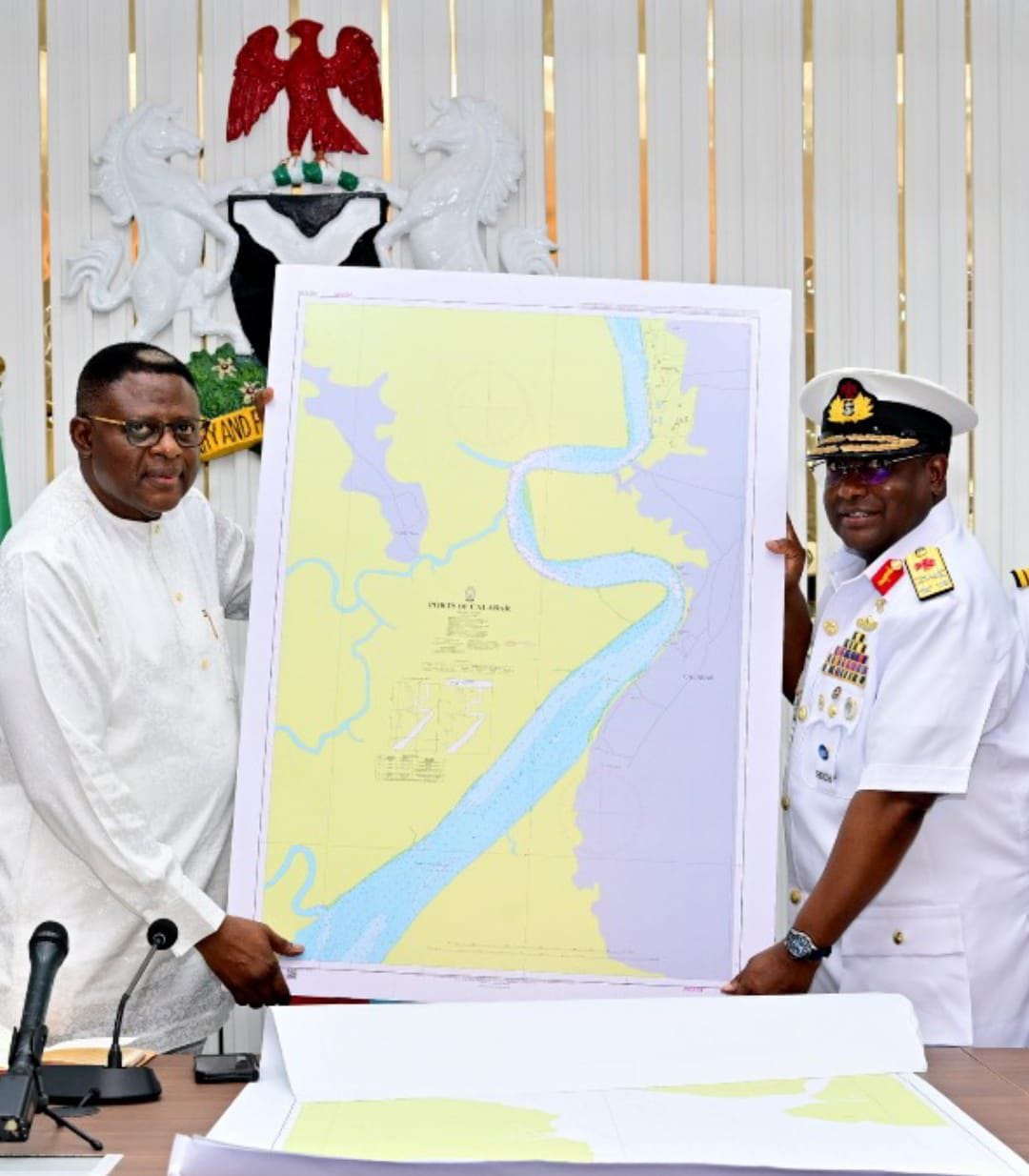
Providing insight into Governor Bassey Otu’s actions, Mr. Gill disclosed that after reviewing the prospects of the Bakassi Deep Seaport project, the Governor authorized a comprehensive hydrographic, geophysical, and geotechnical survey. The contract was awarded to the National Hydrographic Agency under the Nigerian Navy.
The survey, conducted around Parrot and Tomshot Islands, generated critical data on soil composition, water depth, and navigational parameters required for the construction of the deep seaport. According to Mr. Gill, the findings carry far-reaching national implications.
He revealed that the technical report was presented to President Bola Ahmed Tinubu, who subsequently approved funding for the Bakassi Deep Seaport project through Afrexim Bank. The project is to be executed by Arise Integrated Industrial Platforms.
Beyond infrastructure development, the survey also produced an updated nautical chart now recognized in the World Hydrographic Chart. This, he said, strengthens Nigeria’s maritime mapping credentials, generates revenue from international shipping activities, and reinforces the strategic significance of the Cross River Estuary for navigation, maritime security, and continental shelf claims.
Following the presentation of the scientific findings, the President approved the constitution of an Inter-Agency Technical Committee for on-site verification. The committee comprised representatives from Akwa Ibom State, led by its Surveyor-General, alongside the Surveyors-General of Cross River State and that of the Federation, as well as other relevant federal agencies.
During the field exercise, the committee reportedly plotted 239 crude oil and gas wellheads using updated scientific base maps. Mr. Gill noted that this development significantly expands the data beyond the 76 oil wells controversially allocated to Akwa Ibom State after the 2012 Supreme Court judgment, a process Cross River argues was implemented administratively without a comprehensive survey by the National Boundary Commission and the Revenue Mobilization, Allocation, and Fiscal Commission.
Reaffirming the state government’s stance, Mr. Gill maintained that Cross River’s claim is driven by empirical evidence rather than political rhetoric. He stressed that Governor Otu remains committed to restoring the state’s littoral status and recovering associated revenues, while maintaining peaceful and cooperative relations with neighboring Akwa Ibom State.
He expressed optimism that the eventual resolution of the matter would foster broader regional prosperity, benefiting not only Cross River but also residents of Akwa Ibom and the nation at large.
Mr. Gill concluded by underscoring the national security importance of the Cross River Estuary and its offshore boundaries, insisting that the issue transcends state rivalry and touches on Nigeria’s maritime future.
Kingsley Agim