
Women from seven communities in Cross River State have called on Governor Bassey Otu to tackle discriminatory cultural practices, guarantee women's representation in traditional leadership structures, and step up efforts to eliminate Gender-Based Violence (GBV).
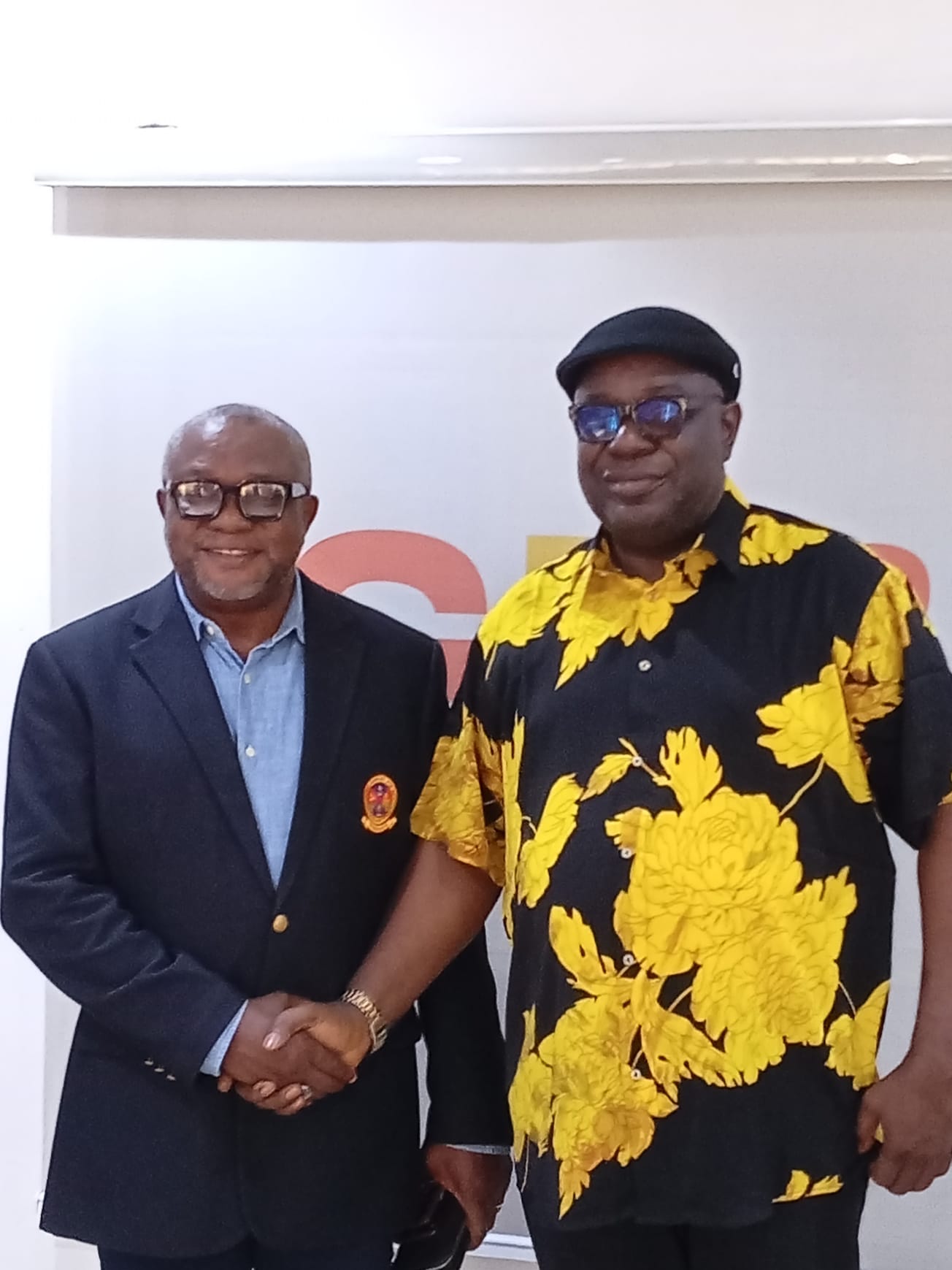
The call was made in a communiqué presented to the Governor on Friday, 27 November 2026, by Mrs. Janet Ohana of Adadi Community in Bekwarra Local Government Area. The presentation took place shortly before the 2026 16 Days of Activism rally began at Millennium Park, Calabar.
The communiqué was jointly issued by representatives of the seven communities and the Basic Rights Counsel Initiative (BRCI), with support from ActionAid and the CLEEN Foundation.
It highlighted exclusion from traditional ruling councils, unequal land ownership rights, discrimination against female children, Female Genital Mutilation (FGM), and harmful traditional approaches to handling sexual violence.
The communities are Idoma, Abredang, Ofumbongha IV, Edondon, Afrike II, Akaraba and Adachi. They insisted that women's participation in community governance must go beyond attending meetings and giving opinions. They want actual representation, voting rights and decision-making powers in traditional councils.
They also condemned discriminatory land practices that restrict women's access to family and community land, saying such restrictions undermine their economic independence, agricultural productivity and contribution to community development.
The women further raised concern over the treatment of mothers who give birth only to girls. No woman, they said, should suffer emotional abuse or discrimination because of the sex of her children, as every child deserves equal love, acceptance and opportunity.
On FGM, they called for intensified community sensitisation and stronger enforcement, warning that the secretive nature of the practice continues to expose women and girls to serious physical and psychological harm.
They also raised alarm over the alleged settlement of rape and other sexual violence cases through traditional arrangements, in which perpetrators reportedly pay compensation in goats, drinks or other items instead of facing legal action.
Describing this as a denial of justice, they insisted that sexual violence must never be treated as an ordinary community dispute. They urged traditional institutions to refer such cases to law enforcement and justice agencies for proper investigation and prosecution.
The women presented ten recommendations to the State Government, calling on the Ministry of Women Affairs and other relevant agencies to take deliberate steps to protect women's rights and advance gender equality. Among them: inclusion of women in traditional ruling councils with voting rights, equal access to land, and stronger campaigns against discrimination based on the sex of children.
Others are sustained interventions to eliminate FGM, improved access to justice, healthcare, psychosocial support and legal assistance for GBV survivors, as well as measures to promote shared household responsibilities between men and women.
They also sought stronger community-based advocacy, engagement with traditional and religious institutions, and effective monitoring mechanisms to turn commitments into measurable action.
Speaking at the start of the rally, the Commissioner for Women Affairs, Hon. Edema Irom, stressed the need for collective action to end all forms of GBV, harmful cultural practices and other negative tendencies, particularly those affecting women and girls.
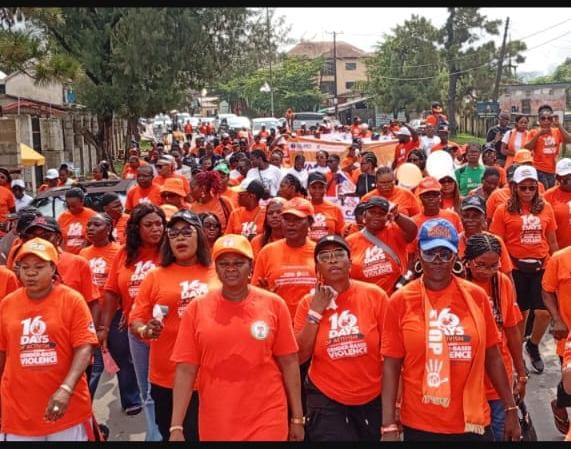
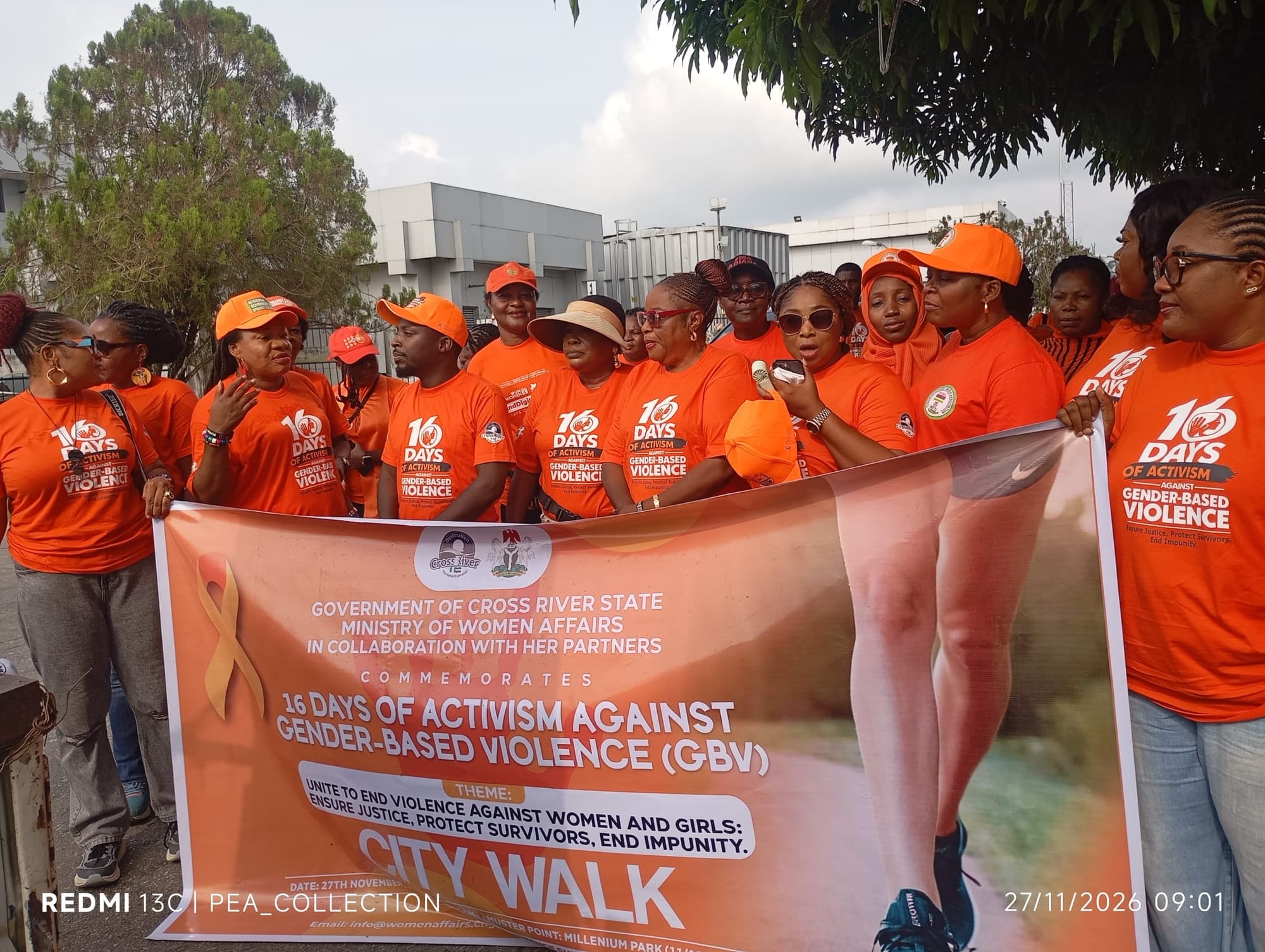
The rally, held under the theme "Ensure Justice, Protect Survivors, End Impunity," was part of activities marking the 2026 16 Days of Activism against GBV. Participants and partner organisations marched from the 11-11 Roundabout through Mary Slessor Avenue and IBB Way to the U.J. Esuene Stadium, and ended at the Ministry of Women Affairs in Calabar.
Those present included BRCI, the International Federation of Women Lawyers (FIDA), the United Nations Population Fund (UNFPA), Girls' Power Initiative (GPI), CLEEN Foundation, ActionAid Local Rights Programme, the Ministry of Women Affairs, the State Agency for the Control of AIDS (SACA), the National Human Rights Commission, Child Protection Network, JONAPWD, Neighbourhood Care-Well Foundation, Onyx Foundation and other partners.
The women reaffirmed their readiness to work with the government, traditional rulers, religious institutions, civil society and the media to promote the rights, safety and dignity of women and girls.
They appealed to Governor Otu to personally engage traditional rulers and community leaders to dismantle discriminatory customs and open meaningful opportunities for women in leadership and decision-making.
They stressed that sustainable community development will remain hard to achieve without equal opportunity, inclusive leadership and deliberate protection of women and girls from violence and discrimination.
By Eme Edet .