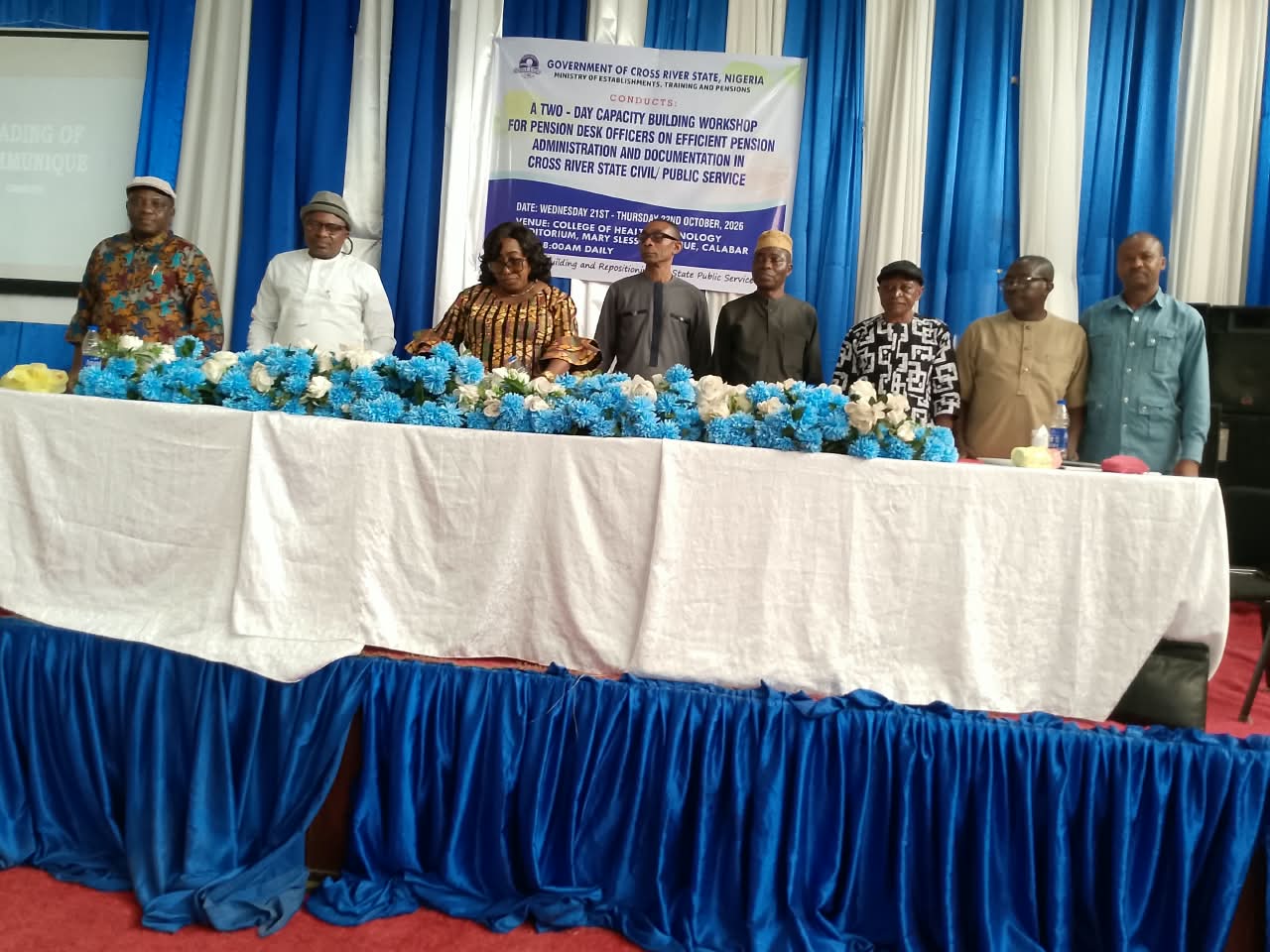

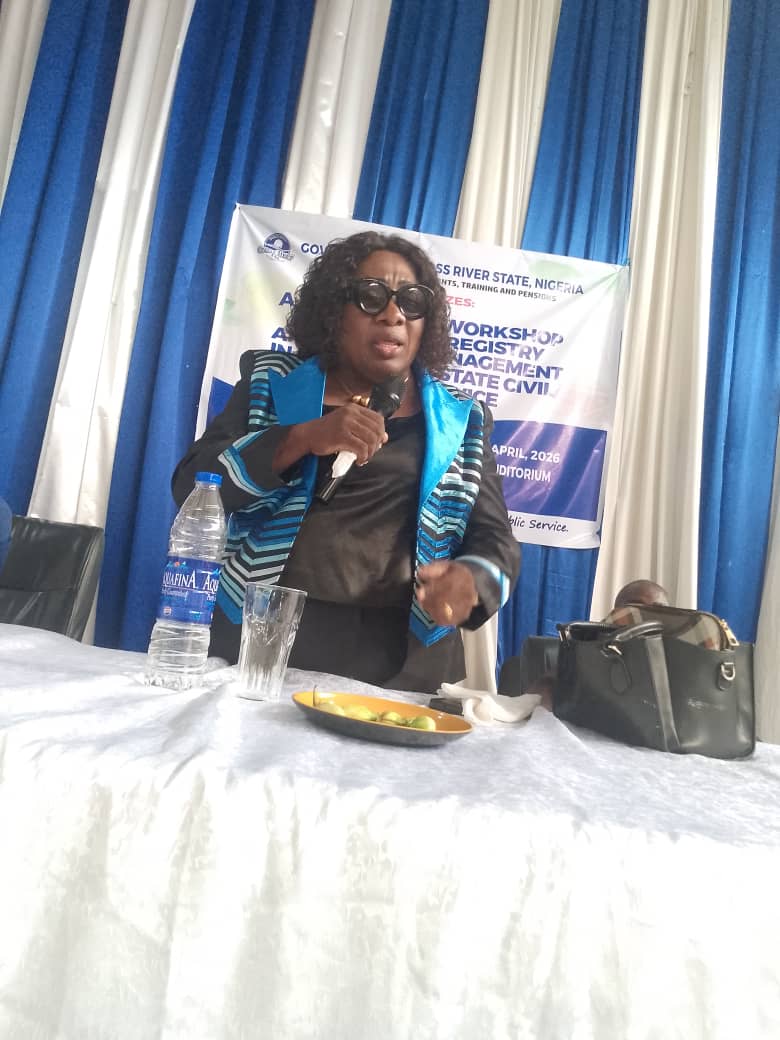
In a deliberate move to enhance service delivery and strengthen administrative efficiency across Ministries, Departments, and Agencies (MDAs), the Cross River State Government has concluded a two-day capacity-building workshop for registry and records management staff.
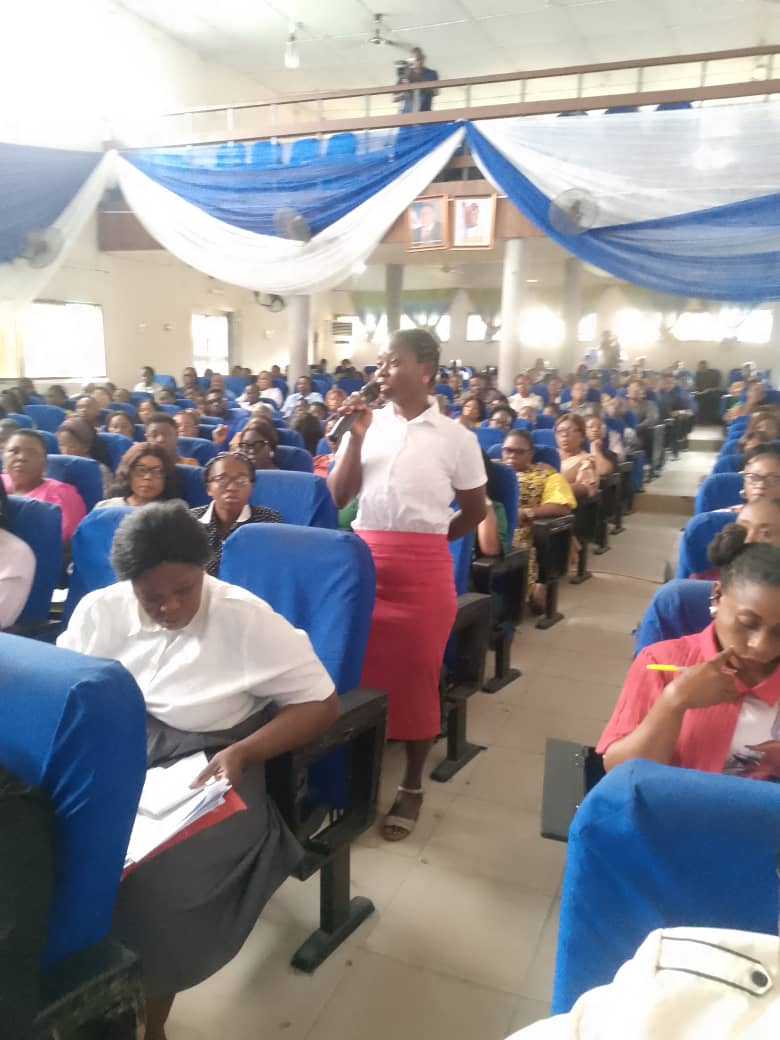
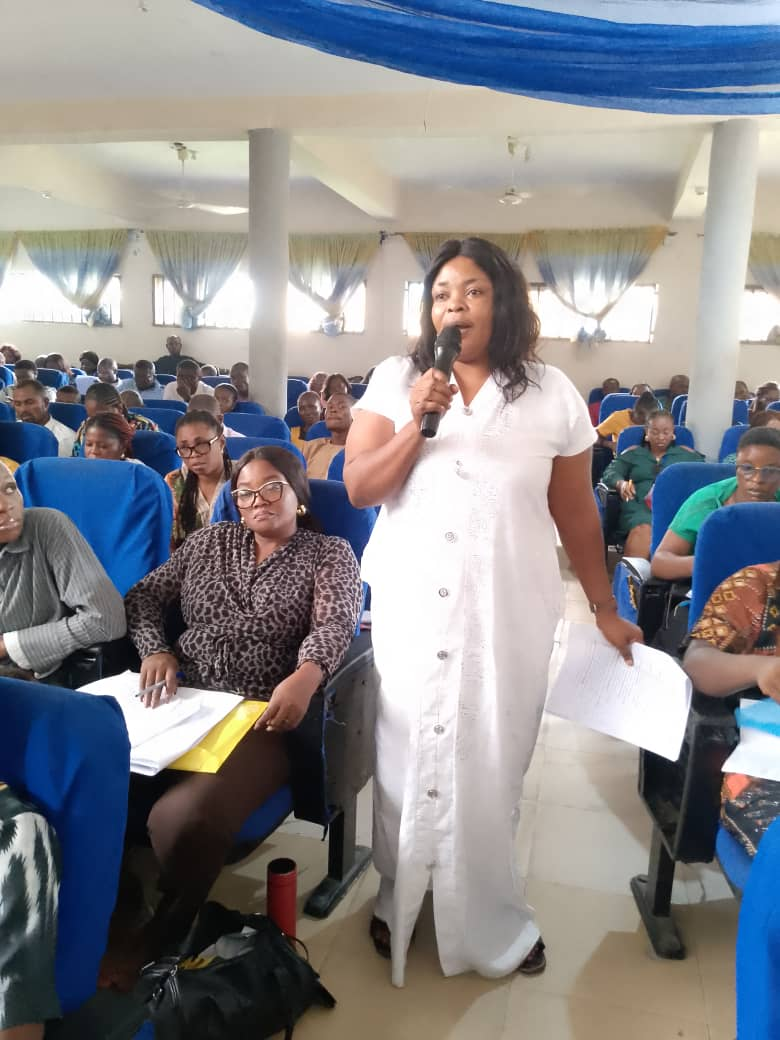
The workshop, held on Monday, April 27, and Tuesday, April 28, 2026, at the College of Health Sciences multipurpose conference hall in Calabar, brought together registry personnel, facilitators, and key stakeholders for intensive training and knowledge exchange.
Declaring the workshop open, the Commissioner for the Ministry of Establishments, Training and Pensions, Hon. Lawrencia E. Ita, underscored the critical role of proper record-keeping in governance. She stressed that files are official documents and must be handled with integrity, warning against any form of tampering or mutilation. The Commissioner also highlighted the importance of dress code and ethical conduct, noting that failure by newly employed staff to adhere to prescribed standards would attract appropriate sanctions.
The first day of the workshop featured presentations on core registry functions and responsibilities. Dr. Stephen Eneji led an interactive session on the organization of registry systems, emphasizing the need for structure, accountability, and clarity in roles. Elder Omini Egu conducted a session on classification and filing systems, focusing on efficient information management and proper tracking of file movement, offering participants insights into modern techniques for maintaining accessible and secure records. Prof. Roibito Ekamem explored effective communication, ethics, and the qualities of a competent registry officer, reinforcing the importance of professionalism and interpersonal skills in public service.
On day two, Elder Omini Egu addressed security and safety in registry operations, highlighting safeguards necessary to protect sensitive government information. Dr. Stephen Eneji followed with a session on the principles and best practices of records management, encouraging adherence to standardized procedures. Prof. Roibito Ekamem led a session on time and stress management, focusing on workplace productivity and employee well-being, and offering strategies to manage workload pressure effectively.
A key highlight of the closing ceremony was the presentation of a communiqué by the Drafting Committee Secretary, Mrs. Helen Emori, outlining recommendations and solutions arising from the workshop. Mrs. Abigail Daniel delivered a vote of thanks, commending the organizers and facilitators for a well-structured and impactful programme.
In her closing remarks, Hon. Ita reiterated the government’s commitment to continuous capacity building and improved service delivery, urging participants to apply the knowledge gained in their respective offices.
Orlando Otu