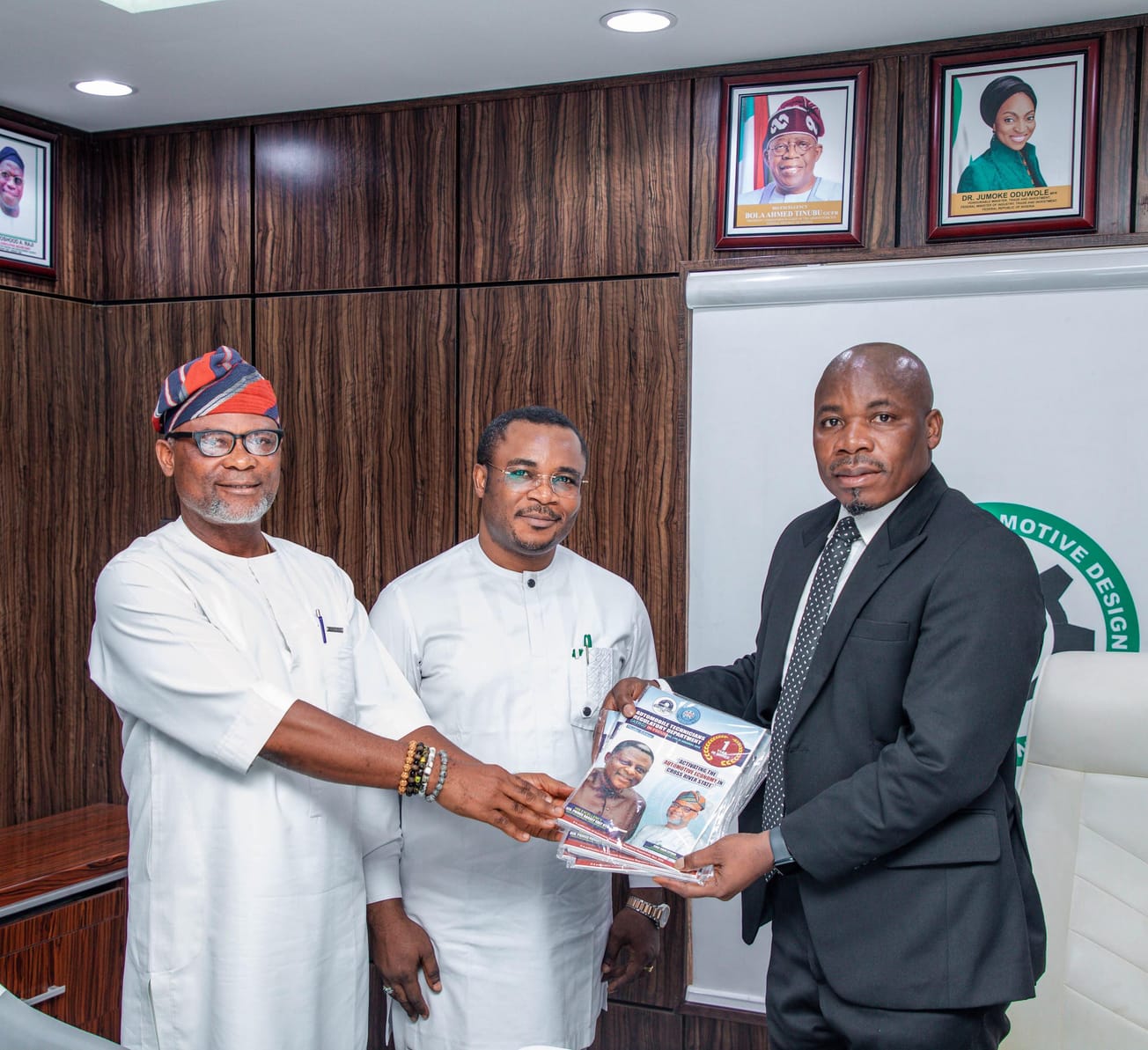
The Cross River State Government has reaffirmed its commitment to strengthening collaboration with the National Automotive Design and Development Council (NADDC) as part of efforts to position the state as a major automotive and industrial hub in Nigeria.
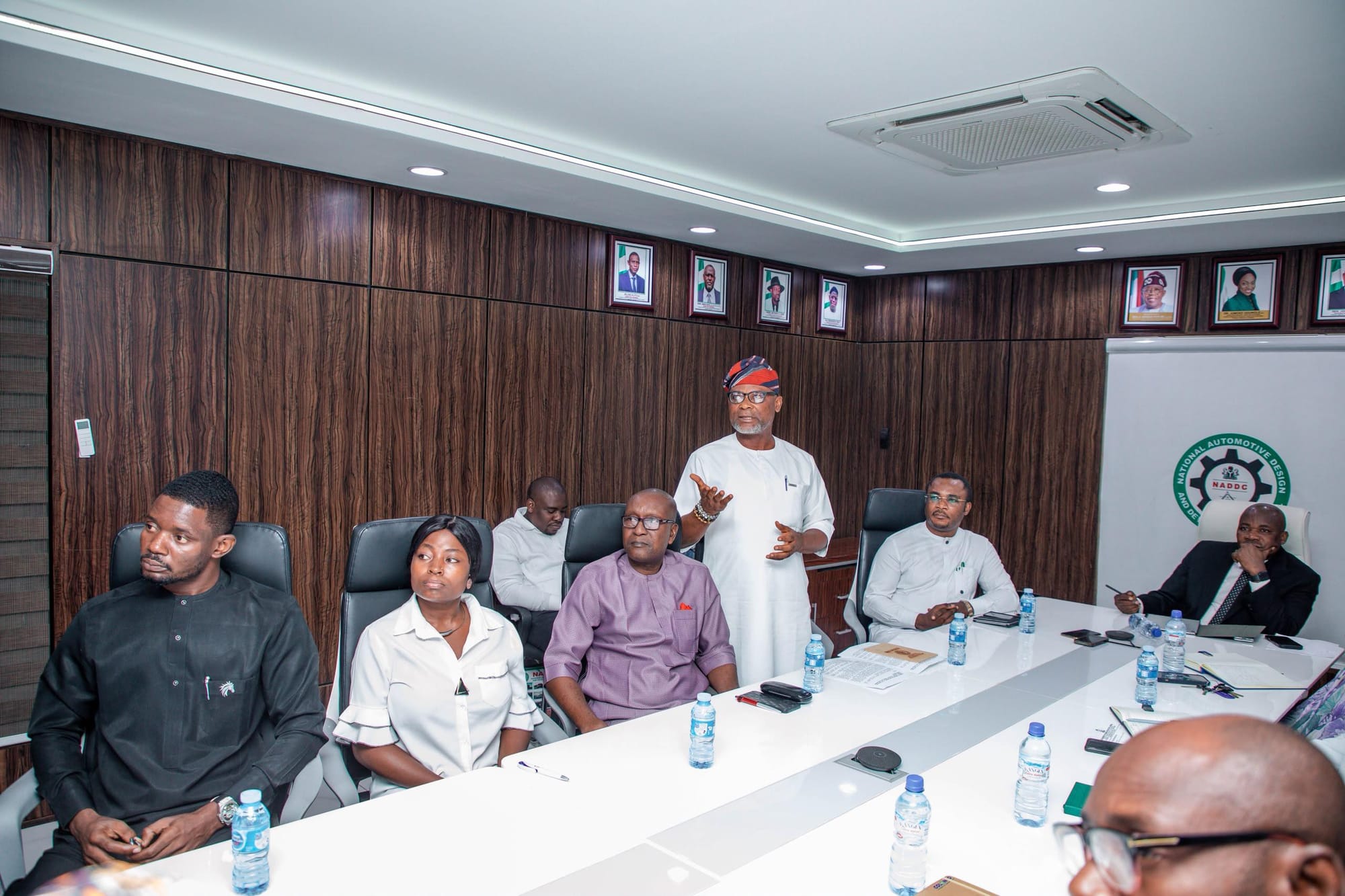
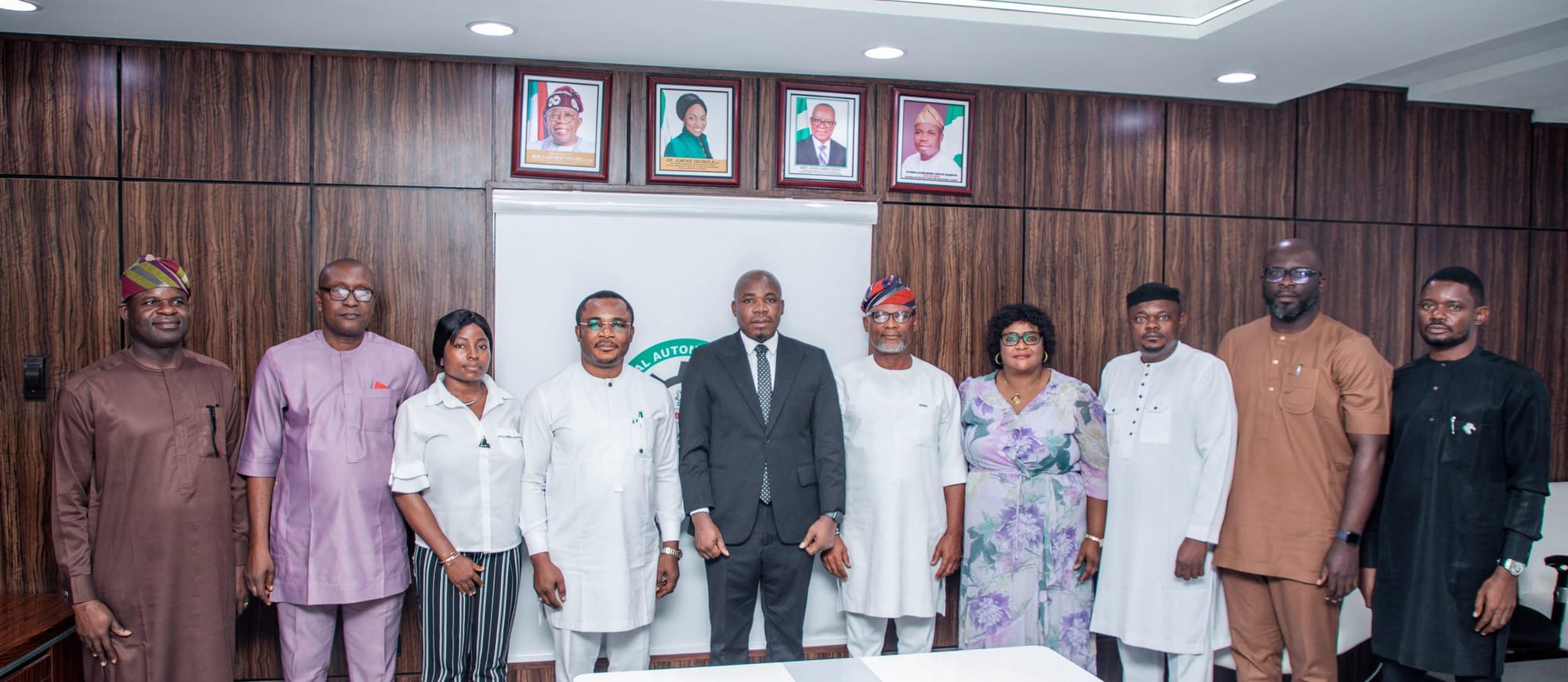
Dr. Bong Duke, Vice Chairman and Chief Executive Officer of the State Planning Commission, made the declaration on Monday during a courtesy visit to the NADDC Director-General, Oluwemimo Joseph Osanipin, at the Council's headquarters in Abuja.
Commending the Council's leadership for advancing Nigeria's automotive industry through local content development, skills acquisition, vehicle assembly, spare parts manufacturing, and the transition to electric mobility, Dr. Duke highlighted Cross River's unique advantages for automotive investments.
He cited the Bakassi Deep Seaport, the Special Economic Zone, improved industrial infrastructure, and reliable power initiatives as key attractions, noting that the state's strategic location offers easier access to regional markets across Equatorial Africa.
Dr. Duke formally requested NADDC's support to establish a vehicle assembly plant or regional spare parts distribution hub in Calabar. He also proposed the establishment of an Automotive Training Centre in the city to equip young people with technical skills under the Council's national automotive skills development programme.
Revealing that the state government recently procured over 100 electric vehicles for Permanent Secretaries, the Vice Chairman stressed the need for a partnership to develop a pool of engineers capable of maintaining the growing EV fleet.
Additionally, he sought NADDC's technical assistance in conducting a feasibility study for a commercial vehicle assembly plant within the Calabar Industrial Zone and appealed for support in enabling prospective investors to access the Automotive Industry Development Fund.
Dr. Duke noted that Cross River is actively attracting investors, pointing to the forthcoming Annual General Meeting of the Manufacturers Association of Nigeria scheduled to hold in Calabar later this year—the first time the event will be hosted outside Lagos in 56 years.
He revealed that the state has simplified its investment approval process to six hours, describing Cross River as a business-friendly destination with adequate security, investment-ready infrastructure, and a government committed to innovation and private sector growth.
He also proposed a pilot electric bus scheme for intra-city transportation in Calabar, Ikom, and Ogoja under the Council's electric vehicle framework.
In his presentation, the Special Adviser of the Automobile Technicians Regulatory Department (ATRD), Chief Ndem Effiong, said the office was established to promote good governance, accountability, and economic empowerment within the automotive sector.
He explained that the office regulates and standardises the operations of automobile technicians, motor dealers, spare parts dealers, and other stakeholders while improving productivity across the industry.
Chief Effiong also announced the formation of the Unified Automobile Technicians Support Group, describing it as the first of its kind in Nigeria and a platform designed to promote collaboration and ensure industry stakeholders align with government policies.
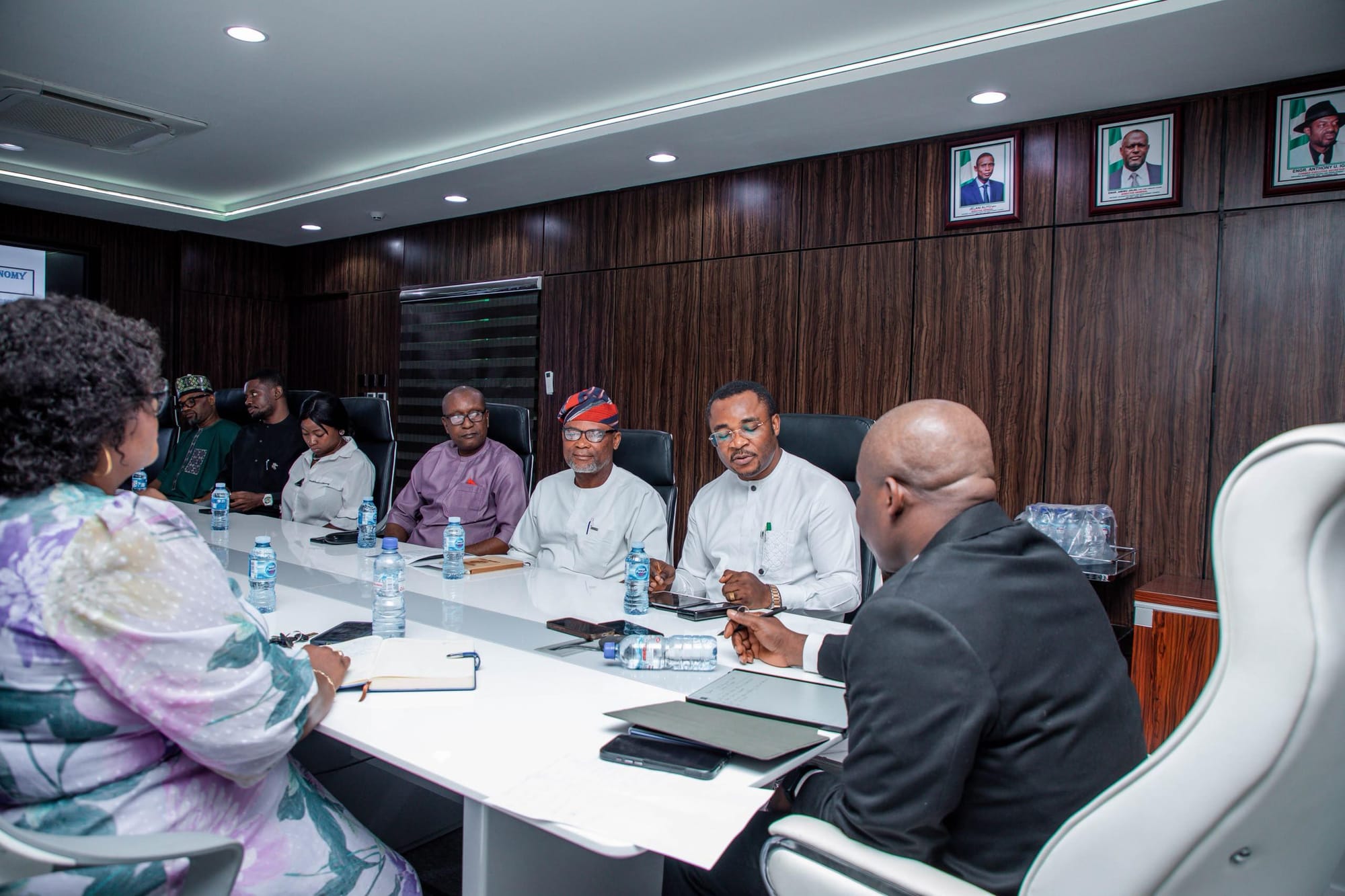
Responding, NADDC Director-General Oluwemimo Joseph Osanipin commended Governor Bassey Otu for establishing a dedicated automotive department and appointing competent leadership to drive the initiative.
He revealed that Cross River had already been recommended to international partners as a preferred location for an automobile assembly plant because it met key requirements, including land availability, security, and proximity to a seaport. He disclosed that the state government's swift response in providing land options at the Bakassi Deep Seaport corridor and the existing Free Trade Zone significantly accelerated discussions.
Osanipin further noted that Cross River demonstrated uncommon responsiveness during the establishment of the Automotive Training Centre, adding that while several states delayed in responding to the Council's requests, Cross River promptly allocated land, enabling rapid project progress.
He also disclosed that following his earlier visit to the state and the government's patronage of locally assembled Innoson vehicles, the manufacturer had concluded plans for a modern automobile workshop in Calabar. He directed the Special Adviser to assess the facility and assured that NADDC would provide additional technical training where necessary.
On the state's procurement of electric vehicles, Osanipin described the initiative as a positive challenge that would accelerate the Council's plans to train technicians and drivers on EV maintenance. He assured that the Council would immediately begin arrangements to organise specialised electric vehicle maintenance training in Cross River.
He also disclosed that Cross River would be considered among the priority states for the deployment of federally procured electric buses once implementation begins.
The Director-General highlighted the Council's End-of-Life Vehicle Recycling Programme, designed to promote environmentally responsible disposal and recycling of old vehicles while creating economic opportunities through the recovery and reuse of vehicle components.
Osanipin reaffirmed NADDC's commitment to sustaining its partnership with Cross River State, expressing confidence that the state would serve as a model for automotive development across the South-South region and Nigeria at large.
By Uchino Amatey