
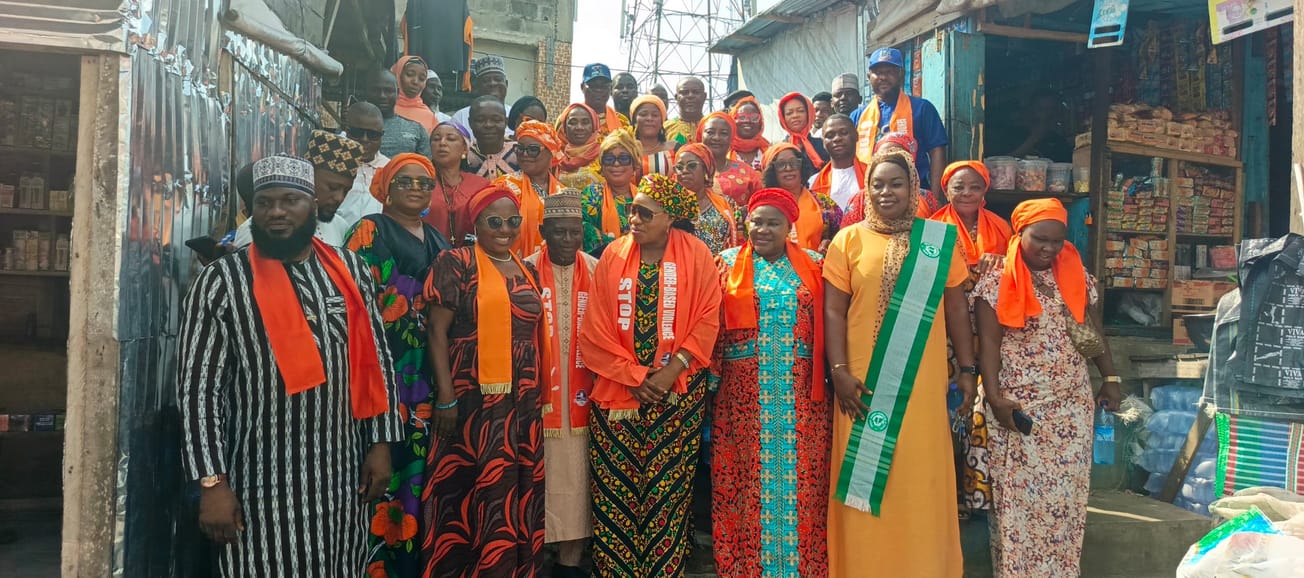
The Cross River State Ministry of Women Affairs has intensified its community-based campaign against Gender-Based Violence (GBV) by engaging Muslim faithful and religious leaders during the Jumu'at prayer service at a Mosque in the State.
The advocacy sought to raise awareness of the rising prevalence of GBV and to urge religious leaders, traditional institutions, men, women and community members to take collective responsibility for preventing all forms of violence against women and girls.
The Ministry described GBV as a serious human rights, public health and developmental challenge in Cross River State and across Nigeria. It listed its many forms, including rape, sexual assault, domestic violence, emotional and psychological abuse, economic exploitation, child marriage, harmful traditional practices, and technology-facilitated abuse on social media and other digital platforms.
Citing the Cross River State Statistics Yearbook 2024, the presentation revealed that 11,717 persons experienced different forms of violence between 2022 and 2024, of whom about 10,130, or 87 per cent, were female. It also referenced the 2024 Nigeria Demographic and Health Survey, which highlights the widespread experience of physical, sexual and emotional violence among women.
The Ministry stressed that the consequences of GBV go beyond physical injury, affecting survivors' dignity, education, economic participation, psychological well-being and overall development.
It recognised religious institutions, particularly mosques and churches, as vital platforms for promoting positive values, shaping attitudes, strengthening families and influencing behavioural change.
The Ministry called on the Imam and other Muslim leaders to use their moral authority to condemn all forms of violence, promote respect for human dignity, challenge harmful cultural and social practices, and encourage peaceful relationships in families and communities.
It also underscored the need to involve men and boys as active partners in promoting positive masculinity, mutual respect, responsible behaviour and the protection of women and girls.
Religious leaders were encouraged to integrate GBV prevention, women's rights, online safety and respect for human dignity into sermons, religious teachings, family counselling, youth programmes and other community activities.
The Ministry urged the mosque and other religious institutions to designate GBV focal persons to serve as first points of contact for people seeking help and to facilitate referrals to appropriate government agencies and service providers.
It stressed that survivors must be treated with dignity, confidentiality and compassion, without discrimination or stigma. Religious and traditional institutions were cautioned against investigating GBV cases themselves, forcing survivors into reconciliation with perpetrators, or replacing established medical, protection and justice systems. Instead, they should offer safe initial support and refer cases to the appropriate authorities.
The Ministry also called for stronger collaboration among religious institutions, the Ministry of Women Affairs, relevant government agencies, civil society organisations and development partners to strengthen community sensitisation, survivor protection, advocacy and access to justice.
The participating institution was encouraged to publicly support efforts to end violence against women and girls, designate a GBV focal person, incorporate GBV awareness into its activities, promote positive behavioural change, and strengthen partnerships with relevant stakeholders.
The advocacy closed with a strong call for collective action, stressing that ending GBV requires more than government policies and legislation. It demands the active participation of religious leaders, traditional rulers, families, community members and every individual committed to building a safer, more inclusive society.
The Ministry reaffirmed its commitment to engaging communities through existing religious and traditional structures, noting that mosques, churches and traditional institutions all have important roles in protecting the rights and dignity of women and girls.
The message of the engagement was clear: ending Gender-Based Violence is a collective responsibility, and every community must be part of the solution.
By Eme Edet