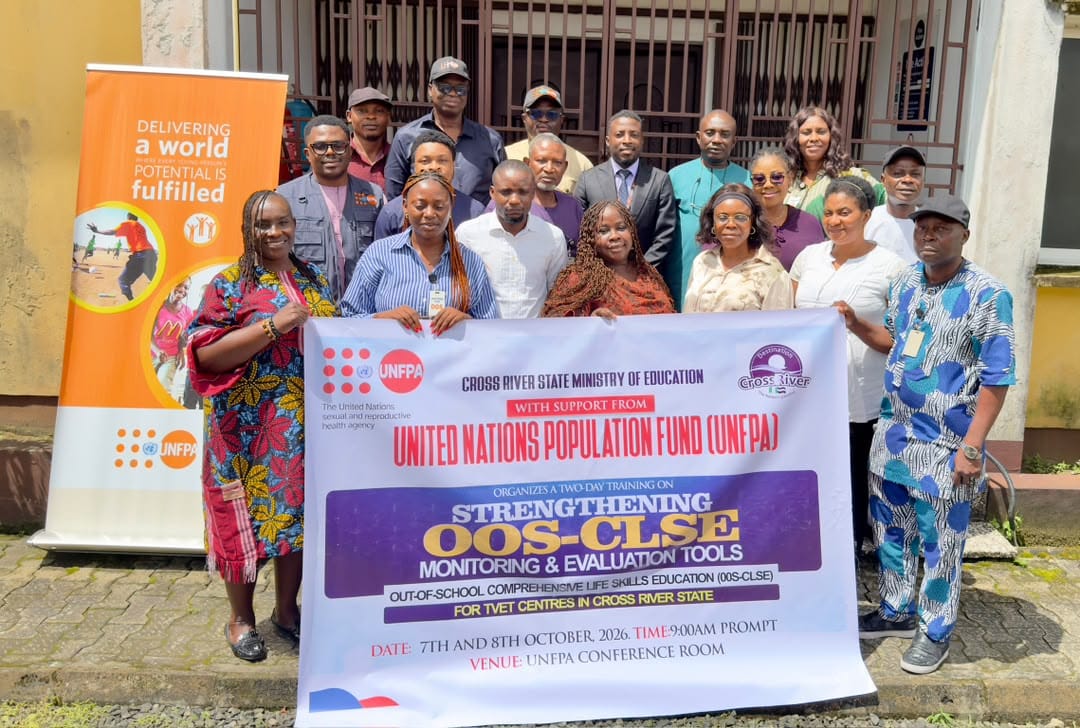
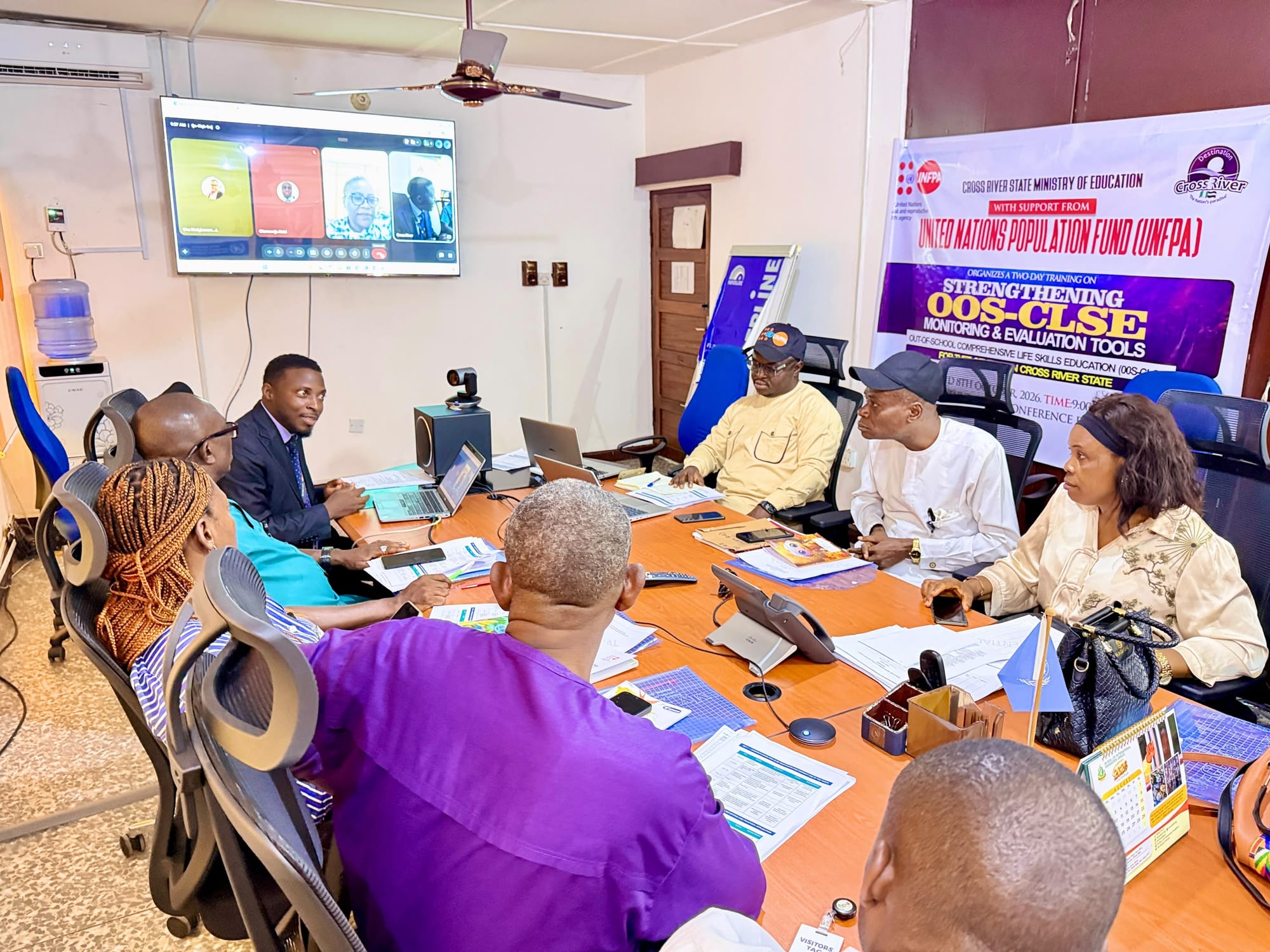
The Cross River State Ministry of Education, in partnership with the United Nations Population Fund (UNFPA), has conducted a specialized training workshop to enhance monitoring, data collection, and reporting for the Out-of-School Comprehensive Life Skills Education (OOS-CLSE) programme across selected Technical and Vocational Education and Training (TVET) centres in the State.
Held from October 7 to 8, 2026, at the UNFPA Office in Calabar, the two-day capacity-building workshop was themed "Strengthening the Use of OOS-CLSE Monitoring and Evaluation Tools."
The initiative is designed to equip programme facilitators with practical skills to utilize monitoring and evaluation (M&E) instruments effectively, maintain precise records, ensure data integrity, and generate reliable insights for future decision-making.
Speaking on behalf of the Commissioner for Education, Senator Professor Stephen Adi Odey, the Ministry’s Focal Person and Director of Education, Mrs. Evelyn Ogozi, commended UNFPA for its steadfast support.
She described the training as both timely and transformative, emphasizing that robust M&E frameworks are vital for strengthening vocational education and enhancing outcomes for young people.
In his remarks, the UNFPA Cross River Sub-Office Head of Office and Programme Coordinator, Dr. Andrew Kirima, reaffirmed the organization's commitment to advancing evidence-based programming for out-of-school adolescents and youth.
"This partnership with the Cross River State Government through the Ministry of Education is apt and welcome, reflecting our shared vision to ensure that the implementation of the out-of-school Comprehensive Life Skills Education programme in the state is evidence-based through the TVET programme," Dr. Kirima stated.
He revealed that the UNFPA-backed OOS-CLSE initiative is currently active across five TVET centres in Cross River State, with phased expansions planned for additional centres as resources permit.
Dr. Kirima noted that the curriculum bridges vital gaps by pairing vocational training with essential life skills, empowering young people to make informed life choices, foster healthy relationships, and safeguard their personal wellbeing. He added that effective tracking mechanisms are crucial for measuring progress and ensuring accurate activity and results reporting.
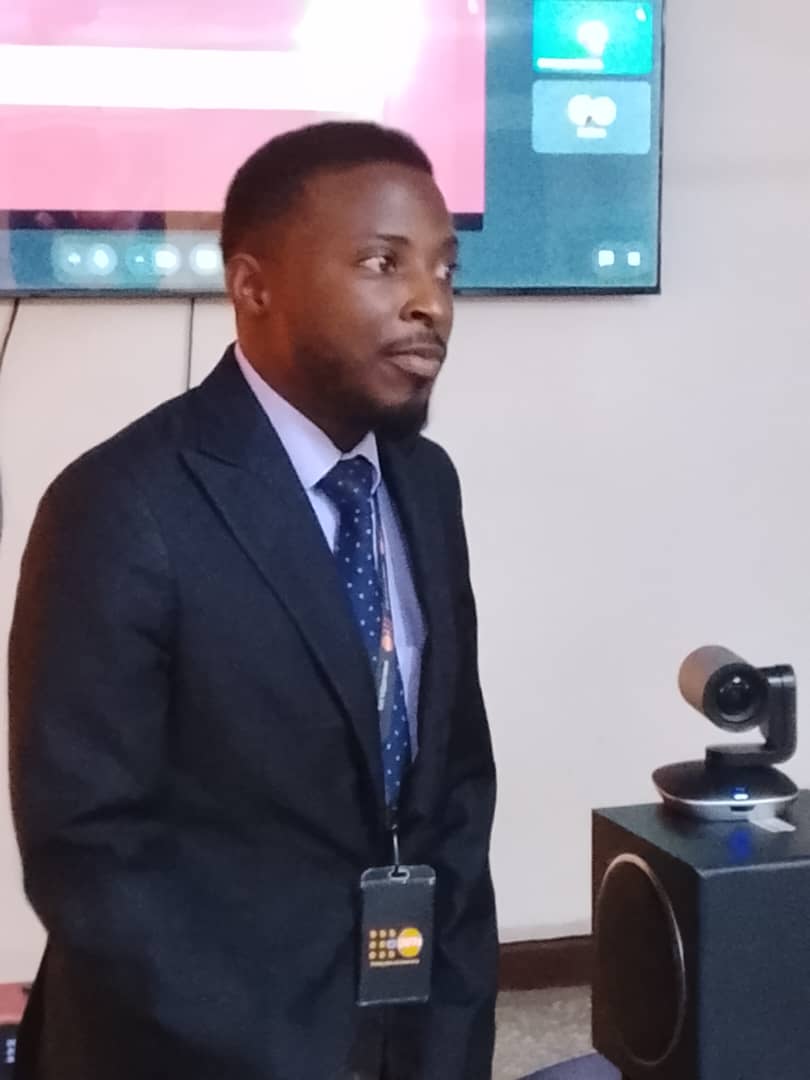
The training sessions were led by Dr. Toriola Femi-Adebayo, who facilitated practical demonstrations on the proper application of M&E tools, accurate data collection, age- and sex-disaggregated reporting, data quality standards, confidentiality, and participant safeguarding.
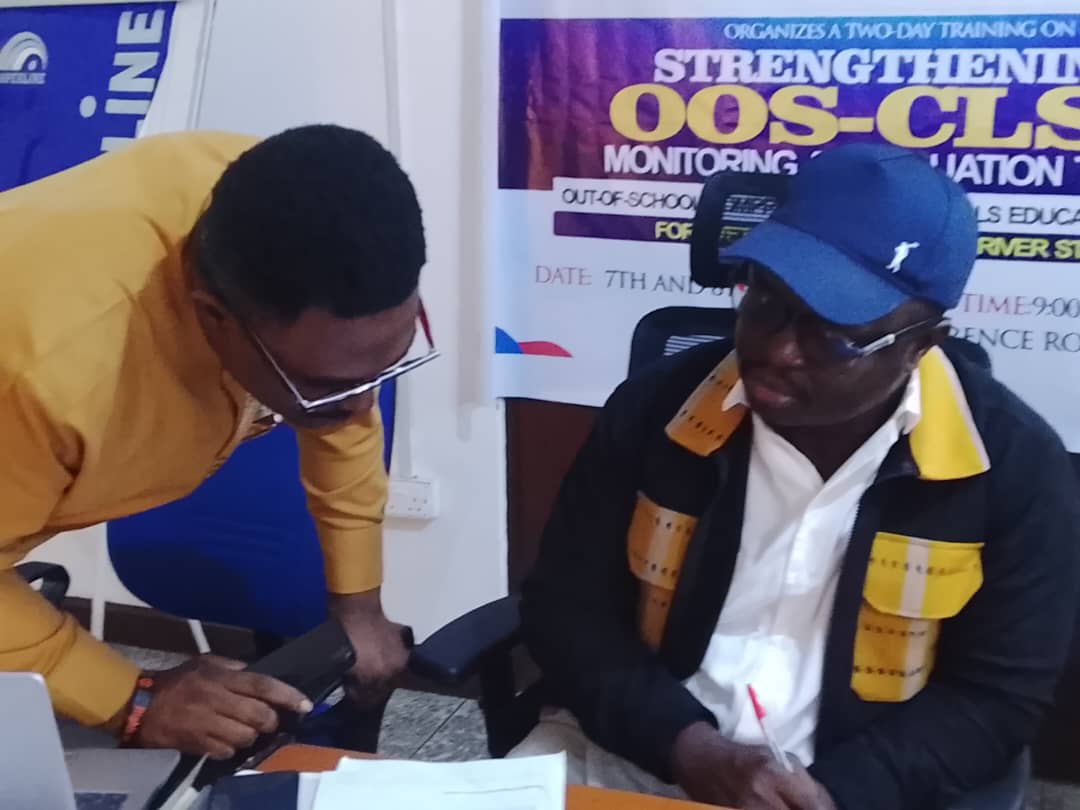
The sessions placed strong emphasis on consistent documentation to enhance oversight and institutional learning. Participants engaged in hands-on group exercises focused on completing monitoring templates, capturing demographic metrics, and evaluating implementation milestones.
These interactive sessions also provided a platform to address common reporting challenges and formulate strategies to elevate data consistency across participating centres.
Reflecting on the experience, participants including Comrade Archibong Bassey, Mrs. Onne Aho Ibia, and Mr. Ate Emmanuel praised the workshop's relevance, noting that it significantly deepened their understanding of monitoring and evaluation mandates.
This ongoing collaboration between UNFPA and the Cross River State Ministry of Education highlights a mutual dedication to transparency, accountability, and the enhanced delivery of life skills education for vulnerable youth across the State.
Affiong Asanye