

Cross River State Governor, Senator Prince Bassey Edet Otu, has warned traditional rulers across the state that they risk losing their certificates of recognition if they allow violence and communal unrest to persist in their domains.
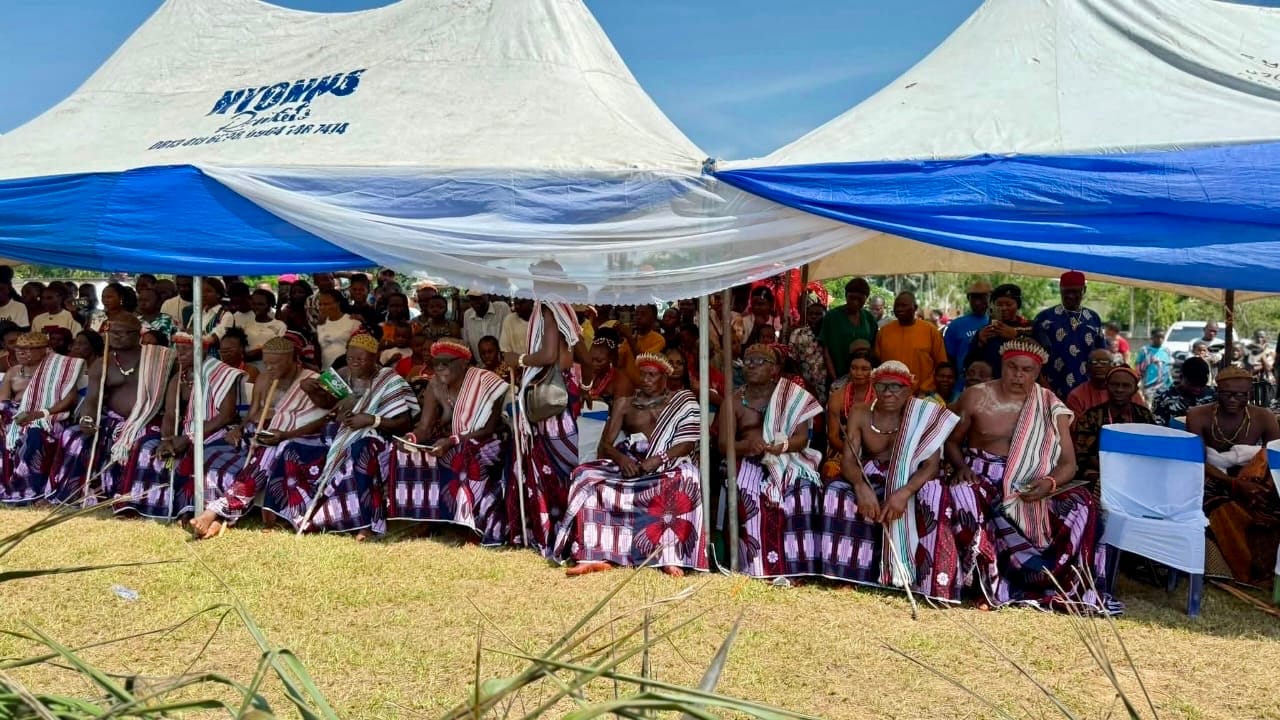
Otu issued the warning on Monday at the 21st edition of the Leboku International New Yam Festival held at the Yakurr Peace Stadium, Ugep, where he condemned the recent deadly clash between Ugep and Idomi communities in Yakurr Local Government Area.
The governor described the conflict, which reportedly claimed lives, as an unacceptable “show of shame”, stressing that communal violence could undermine peace, tourism and economic development in the state. He said the government had contemplated cancelling the 2026 Leboku festival following the crisis but decided against it because such a move would defeat the festival’s core objective of promoting peace, unity and brotherhood among the Yakurr people.
“I wish to condemn in entirety the recent inter-communal war between Ugep and Idumi communities, which led to the loss of precious lives. To the warring communities and other Yakurr communities which may have aligned with the combatants, I condemn this in its entirety. It was indeed a show of shame,” Otu said.
Addressing the Obol Lopon of Ugep and Paramount Ruler of Yakurr, Obol Ofem Ubana Eteng, the governor questioned how the crisis was allowed to escalate despite the traditional institution’s responsibility for maintaining peace and regulating relationships within the community. While acknowledging that Eteng’s 11-year reign had largely been peaceful and impactful, Otu urged him to exercise greater authority over his subjects and prevent a recurrence.
“Your 11 years of reign on the throne of your forefathers have so far been peaceful and impactful. What went wrong beyond your control this time? As the head of the entire Yakurr nation, you must control your subjects,” he said.
Otu extended the warning to village heads, clan heads, paramount rulers and other recognised traditional authorities, reminding them that maintaining peace and preserving the customs and traditions of their people were among their primary responsibilities. He warned that the state government would not hesitate to sanction traditional rulers whose domains became centres of violence.
“The state government will therefore not fail to withdraw the certificate of recognition from any royal father where there is a breakdown of peace in his domain. Tourism cannot thrive in a volatile and chaotic environment,” the governor warned.
The governor also declared that the state government would not recognise any of the rival factions involved in the traditional leadership dispute in Agoi Ibami, another community in Yakurr LGA. The declaration followed an appeal by the Obol Lopon Advisory Council, through its Publicity Secretary, Comrade Azikiwe Williams, for government intervention after two persons were reportedly presented as Chief and Clan Head of the community on the same day.
“The Cross River State Government will not recognise any of the camps of the two people who are parading themselves presently in Agoi Ibami,” Otu declared, adding that government would only recognise a leader after the contending parties had resolved their differences and agreed on a person to represent the community.
Speaking on the theme of the festival, “Rooted in Culture, Growing in Prosperity,” Otu said it aligned with his administration’s strategy of deploying culture and agriculture as drivers of economic growth, employment and improved livelihoods. He said Leboku had evolved beyond a traditional yam harvest celebration into a cultural and economic platform capable of attracting tourists, investors and development opportunities to Cross River.
The governor linked the festival’s agricultural heritage to his administration’s “green economic revolution”, saying government was working to move farmers from subsistence production to commercially viable agriculture through mechanisation, improved access to equipment, financing and markets. He also disclosed that his administration had recently unveiled a $70 billion public-private partnership investment package, with about $1.5 billion earmarked for agriculture-related investments, including rice value-chain development, fisheries, dairy production, trawler fishing and oil palm development.
Earlier, Chairman of Yakurr Local Government Area, Hon. Yibala Inyang, described Leboku as a celebration of thanksgiving, culture, unity and economic opportunity. He said the festival, which originated as a thanksgiving for the first yam harvest, had grown into an international cultural event with significant implications for tourism, agriculture and economic development, commending the state government and other stakeholders for sustaining the celebration.
Speaking on behalf of the Obol Lopon Advisory Council, Williams commended the Otu administration for infrastructure projects in Yakurr and appealed for further development of rural communities. He specifically sought the rehabilitation and upgrading of the Ugep Peace Stadium, including the provision of a standby generating set, as well as the extension of the Cross River Broadcasting Corporation (CRBC) signal to Yakurr, saying poor coverage had deprived residents of access to government programmes and public-interest broadcasts.
The Commissioner for Tourism, Arts and Culture, Mr. Obi Ayuk, said the state government was committed to repositioning Leboku as a major tourism attraction. Ayuk described the festival as a manifestation of Yakurr’s cultural identity, ancestral heritage and communal values, adding that the ministry was working to improve tourism attractions in the area, including the clean-up of the Yakurr waterfall.
He identified the area’s waterfalls, natural landscapes, heritage sites, music, dance, arts and traditions as valuable tourism assets capable of contributing significantly to the state’s economy. The commissioner, however, stressed that the economic potential of the festival and other tourism assets could only be fully realised in an atmosphere of peace and hospitality, urging residents to shun violence and preserve the stability necessary for tourism to thrive.



By Kingsley Agim