SUMMARY OF FACTS AND DECISION.
Supreme Court Judgment, Oil Wells Derivation, and the Cross River–Akwa Ibom Dispute
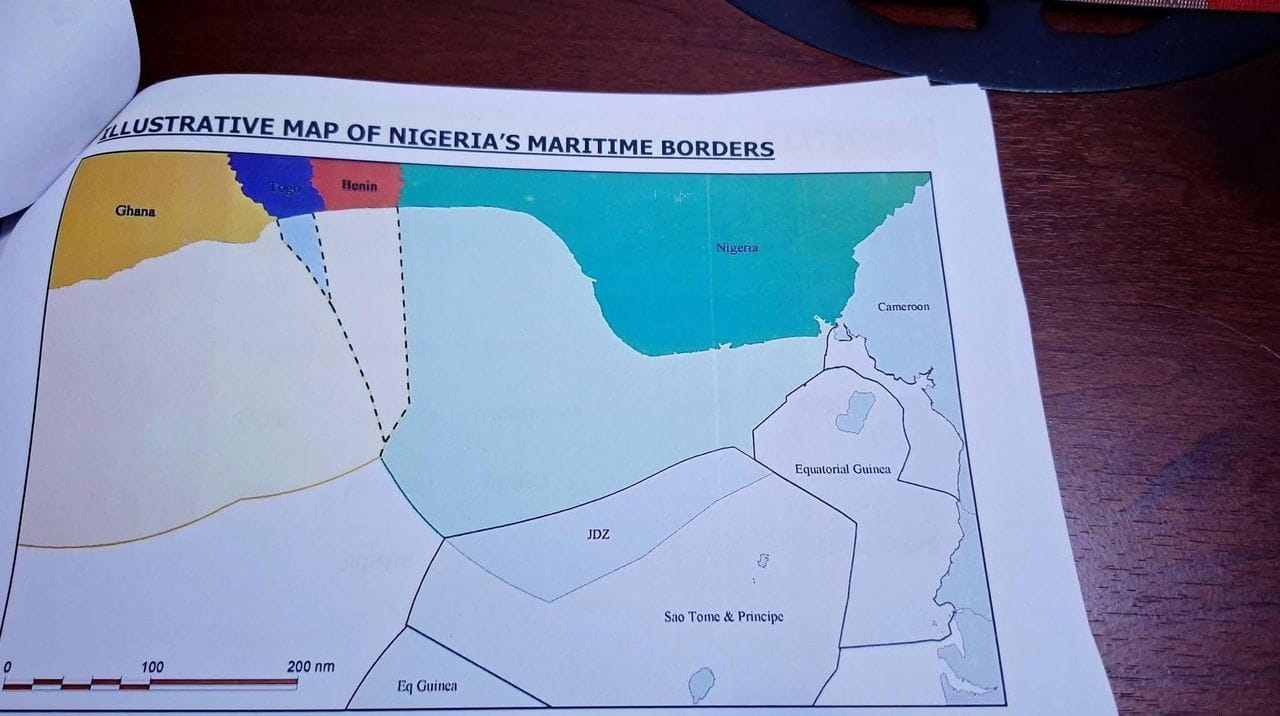
The dispute between Cross River State and Akwa Ibom State over 76 offshore oil wells arose after the 2002 International Court of Justice (ICJ) judgment, which ceded the Bakassi Peninsula to Cameroon and altered Nigeria’s coastal configuration in the Cross River estuarine area.
Cross River State maintained that despite the ICJ judgment, it retained coastal and littoral access to the sea through the Cross River Estuary, and therefore remained entitled to offshore derivation benefits. Akwa Ibom State opposed this position, relying largely on administrative boundary interpretations.
In its 2012 judgment, the Supreme Court ruled that by virtue of the ICJ decision, Cross River State no longer maintained a seaward coastline contiguous to the open sea extending to the 200-metre isobath, and therefore could not claim automatic offshore entitlement based solely on littoral status.
However, the Court did not determine ownership of the 76 oil wells, nor did it award them to Akwa Ibom State.
The appeal brought by Cross River State was struck out, not dismissed, and the lead judgment concluded clearly:
“The Appellant’s reliefs are not granted and the appeal is struck out without cost.”
Crucially, the Supreme Court made no order transferring, awarding, or reallocating the 76 oil wells.
Instead, the Court expressly stated that the responsibility for oil well attribution lay with the constitutionally designated federal agencies—the National Boundary Commission (NBC), the Office of the Surveyor-General of the Federation (OSGOF), and the Revenue Mobilisation, Allocation and Fiscal Commission (RMAFC)—and that the wells should be ascribed to the offshore boundary between Cross River State and Akwa Ibom State where they are physically located, based on proper technical determination.
Despite this clear limitation of the judgment, since 2012, the NBC, RMAFC, and OSGOF have consistently ascribed derivation from the 76 oil wells to Akwa Ibom State, relying on an assumed interpretation of the Supreme Court judgment.
This administrative practice is significant because the Supreme Court never issued any directive awarding the oil wells to Akwa Ibom State,including wells located within the mouth of the Cross River and Abana field.
Equally important is the fact that no scientific, geological, hydrographic, or geodetic survey has ever been carried out by these agencies to verify the actual coordinates and locations of the wellheads relative to the offshore boundaries of both states.
No coordinate-based mapping, seabed analysis, or boundary overlay exercise was undertaken to establish factual entitlement.
It is only through Cross River State’s recent petition to the President and the Inter-Agency Committee that a first-of-its-kind scientific and geological geolocation exercise has been initiated.
The cross River State petition to the President provided a 600 page comprehensive and Compelling scientific, geological, hydrographic, maritime and legal evidence including surface coordinates of 245 oil wells
Reservoir coordinates of 188 wellheads and 41 shared Reservoir continuity straddles extending from the cross River Elongated Continental Shelf toward the boundary with Cameroon.
Including the Body of water within the Cross River Estuary from the West point median line to the east point line at the mouth of the Akwayafe Estuary.
This exercise applies modern survey science and verifiable coordinates to determine the precise offshore locations of the 76 oil wells in relation to the maritime boundaries of both Cross River State and Akwa Ibom State.
A comparison with earlier Supreme Court decisions further clarifies the issue. Where the Supreme Court intended to award oil wells and derivation entitlement, it made specific and detailed orders.
In Rivers State v. Akwa Ibom State, where 86 oil wells were awarded to Rivers State, the Court expressly identified the applicable maps, coordinates, and wells.
Similarly, in Rivers State v. Imo State, where oil wells were reassigned from Imo State to Rivers State, the judgment clearly listed the wells, their locations, coordinates, and host communities.
By contrast, in Cross River State v. Akwa Ibom State, no such orders exist.
The judgment contains no list of the 76 oil wells, no coordinates, no Oil Mining Lease (OML) numbers, and no host communities. This omission is decisive and confirms that the Supreme Court did not intend to allocate or reallocate the oil wells, but deliberately left the matter to technical determination by federal agencies.
In summary, the 2012 Supreme Court judgment did not award the 76 oil wells to Akwa Ibom State, and post-judgment administrative attribution has occurred without judicial mandate and without scientific verification.
The issue therefore remains open to lawful reassessment based on verifiable scientific, geological, and maritime boundary evidence, consistent with both the judgment of the Supreme Court and Nigeria’s constitutional framework.
Rt. Hon. John Gaul Lebo.