
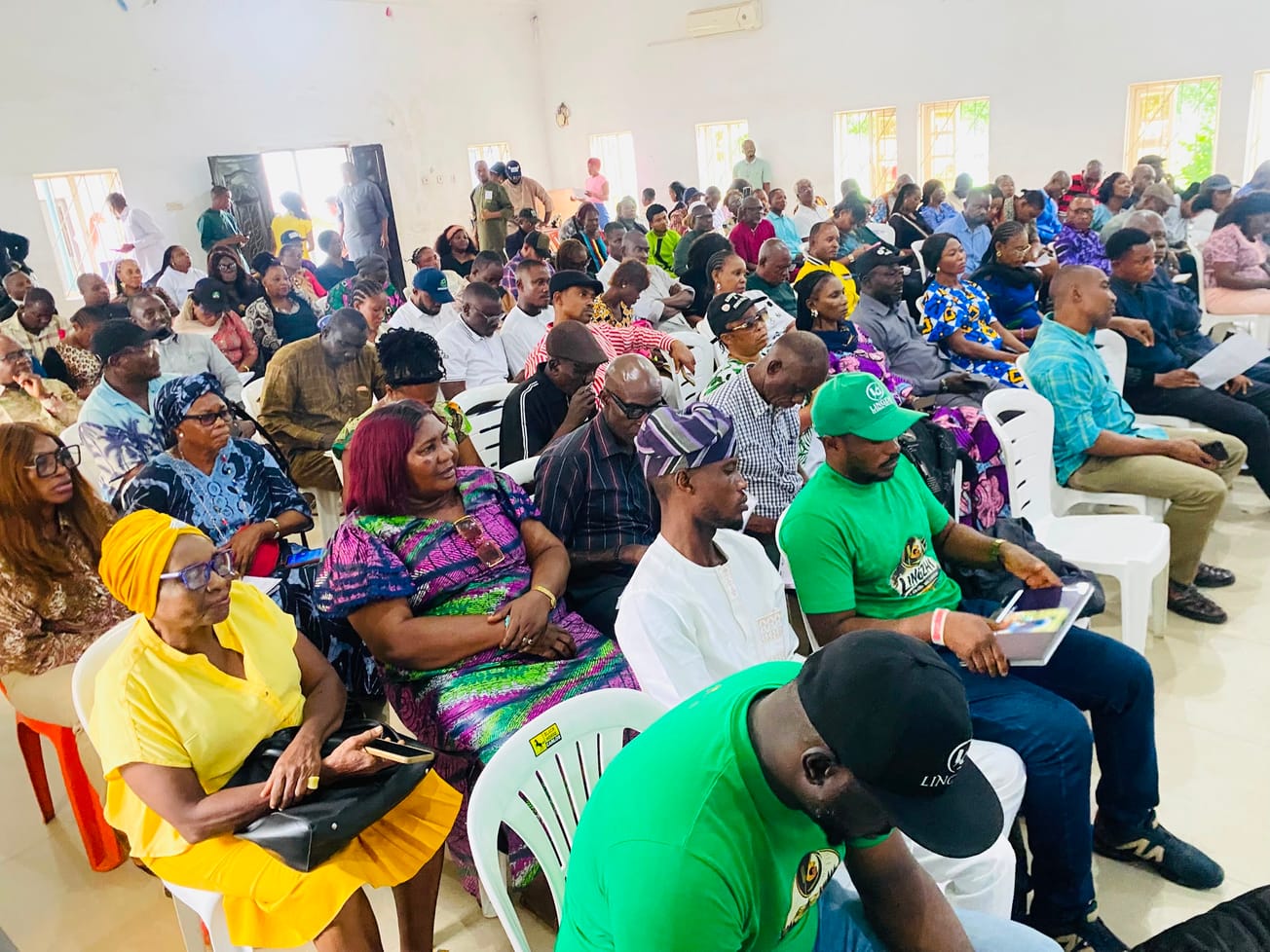
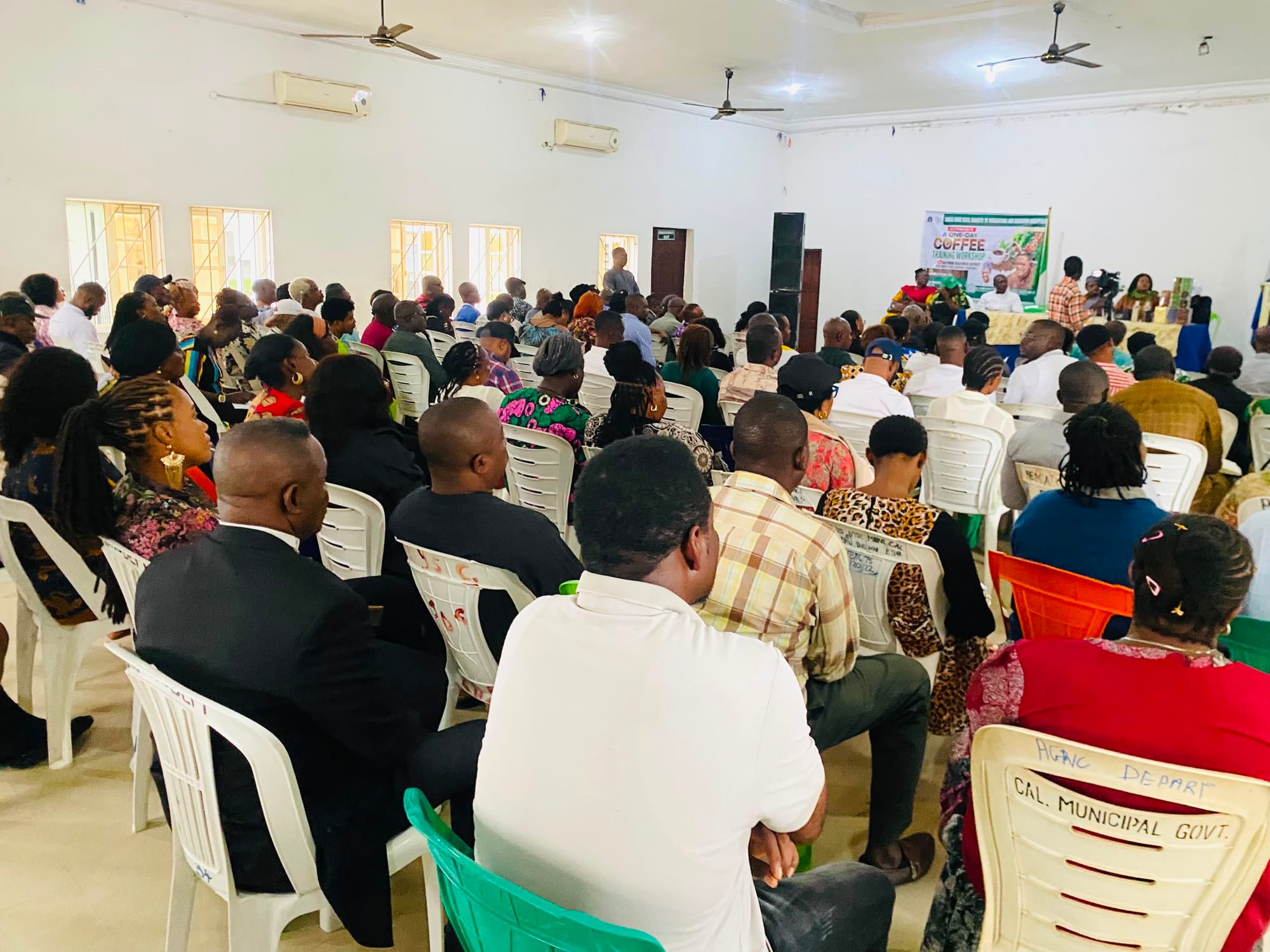
The Cross River State Government has concluded a statewide intensive capacity-building programme for more than 700 smallholder farmers, youths and agricultural extension officers across the three senatorial districts, marking another major milestone in Governor Bassey Otu’s ambitious Coffee Revolution aimed at transforming agriculture into a catalyst for rural prosperity and economic diversification.
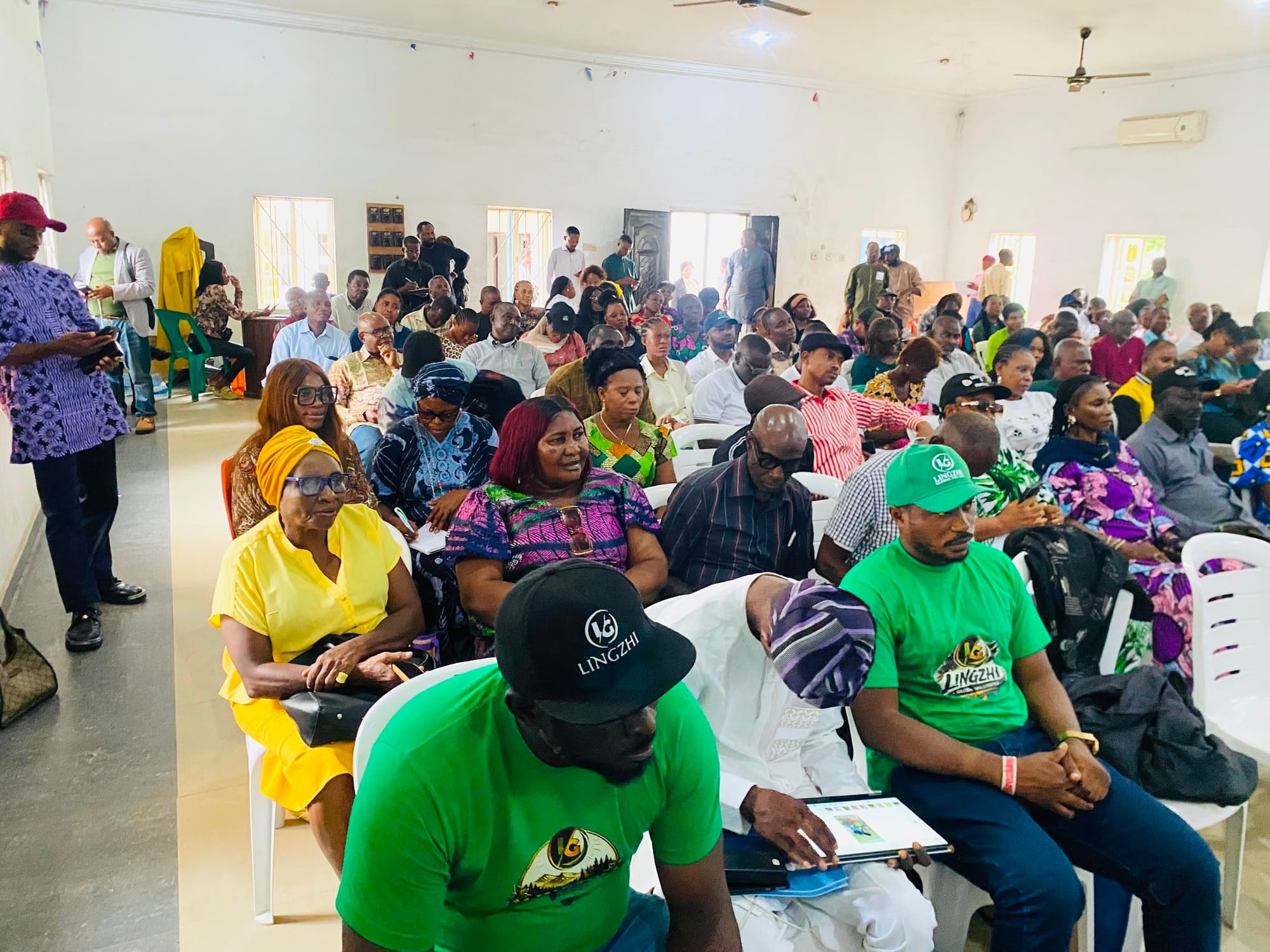
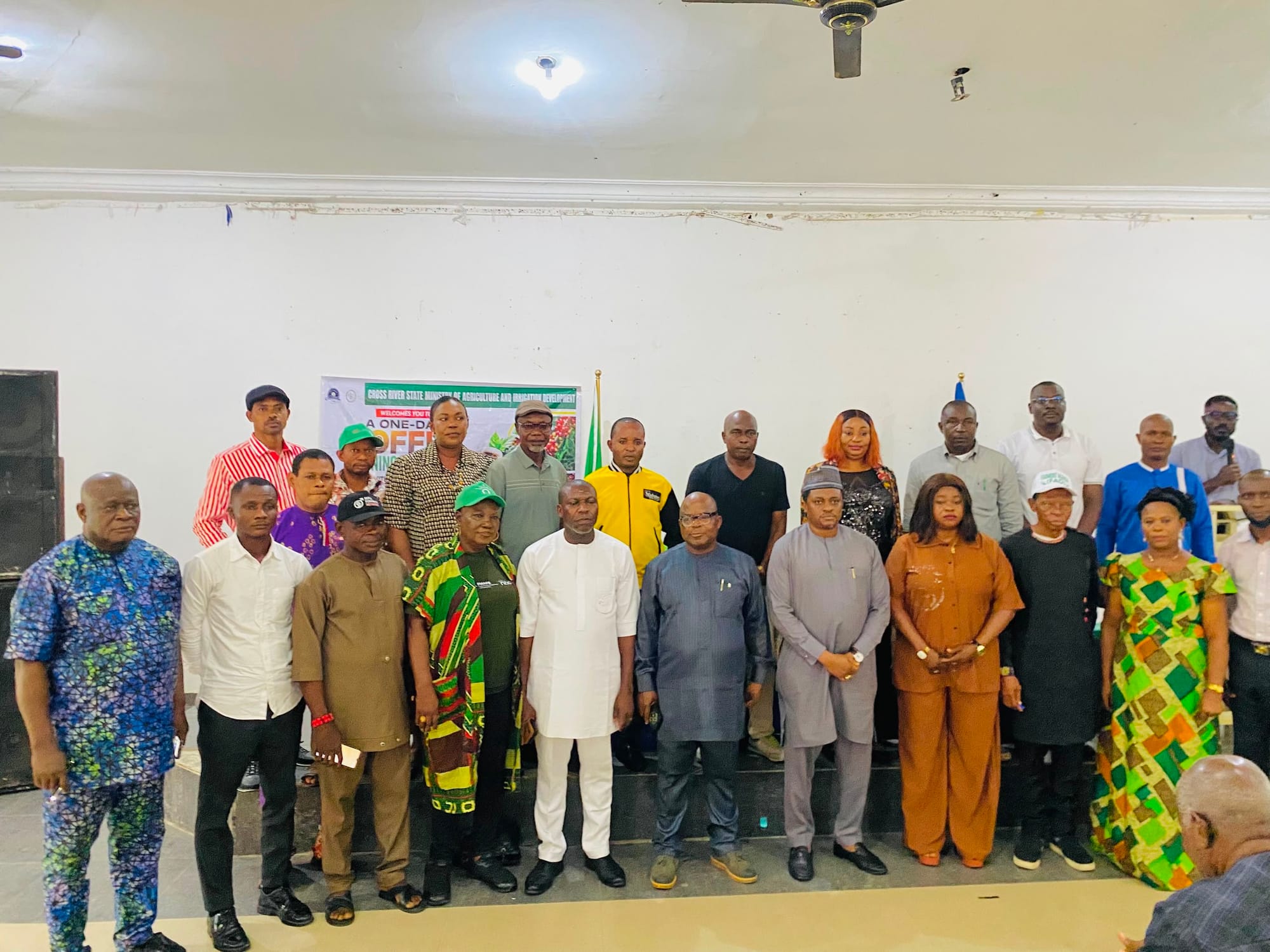
The training programme culminated on Monday at the Calabar Municipal Council Hall with stakeholders from the Southern Senatorial District, following earlier sessions held in Bekwarra for the Northern District and Ikom for the Central Senatorial District.
Declaring the Southern training open, the Commissioner for Agriculture and Irrigation Development, Hon. Johnson Andiambey Ebokpo, described the coffee initiative as a deliberate economic strategy under the Otu administration’s People First agenda to expand wealth creation, stimulate rural liquidity and position Cross River as Nigeria’s leading coffee-producing state.
According to him, the programme goes beyond agricultural production, representing a long-term economic blueprint designed to empower ordinary citizens through smallholder farming rather than concentrating wealth in large commercial estates.
“The Coffee Revolution in Cross River State is not by chance. It is driven by the passion and visionary leadership of His Excellency, Apostle Senator Prince Bassey Edet Otu, to diversify our economy through agriculture and create sustainable livelihoods for our people,” Ebokpo said.
Explaining the government’s strategy, the Commissioner noted that the administration deliberately adopted a smallholder model because it would place income directly in the hands of thousands of rural households, thereby increasing purchasing power and stimulating growth across other sectors of the economy.
Drawing parallels with the economic transformation driven by cocoa farming in Ikom, he said widespread coffee cultivation would similarly generate wealth that would circulate within local communities, creating opportunities for businesses in fashion, hospitality, food processing and other value chains.
Ebokpo further described coffee as a unique enterprise capable of creating global earning opportunities for young entrepreneurs, noting that unlike cocoa, coffee processing requires relatively modest capital investment and can be undertaken on a small scale.
“Our desire is that within the next five years, Cross River will produce numerous globally recognised coffee brands. With the right skills, anyone can become a dollar, euro or pound earner through coffee processing from the comfort of their home,” he stated.
The Commissioner highlighted Cross River’s natural comparative advantage, explaining that the state is among the few regions globally capable of producing both premium Arabica coffee in the highlands of Obanliku and Obudu and Robusta coffee across its lowland areas. He added that the state’s exceptional rainfall pattern and unique Montmorillonite clay soil would enhance yields and produce premium-quality coffee capable of commanding competitive prices on the international market.
To accelerate production, Ebokpo announced that government has subsidised improved coffee seedlings, reducing their cost from ₦1,000 to ₦300 per seedling, while absorbing the remaining ₦700. He disclosed that the distribution of the subsidised seedlings, temporarily suspended because of unfavourable weather conditions, would officially resume on Wednesday, July 1, 2026.
Also speaking, the Special Adviser to the Governor on Agriculture, Prof. John Shiyam, urged participants to begin immediate land preparation to maximise the current planting season, assuring them that the initiative offers sustainable wealth creation rather than temporary empowerment.
According to him, farmers cultivating one or two hectares of coffee stand to become successful agripreneurs within a few years, as government is simultaneously developing reliable market structures to guarantee profitable returns on investment.
Prof. Shiyam also led participants through a practical field demonstration on the proper techniques for planting coffee seedlings, equipping beneficiaries with the technical knowledge required to establish productive plantations.
To guarantee quality control and long-term competitiveness, the Ministry of Agriculture announced plans to deploy a comprehensive data-driven monitoring system that will track beneficiaries from seedling distribution to farm locations, while organising participants into seven specialised cooperatives covering different segments of the coffee value chain. Government also invited private sector investors to partner in value addition and disclosed ongoing plans to establish a commercial coffee estate in the Southern Senatorial District alongside additional cocoa estates.
Participants were further directed to register with the National Coffee and Tea Association of Nigeria (NACOFTA) and the All Farmers Association of Nigeria (AFAN) to strengthen industry coordination and position Cross River to benefit from future national interventions. Goodwill messages from agricultural stakeholders, including AFAN State Chairman, Nyam Bisong, underscored broad institutional support for what many described as the dawn of a new era in Cross River’s agricultural transformation.




By Kingsley Agim and Blessing Enagu