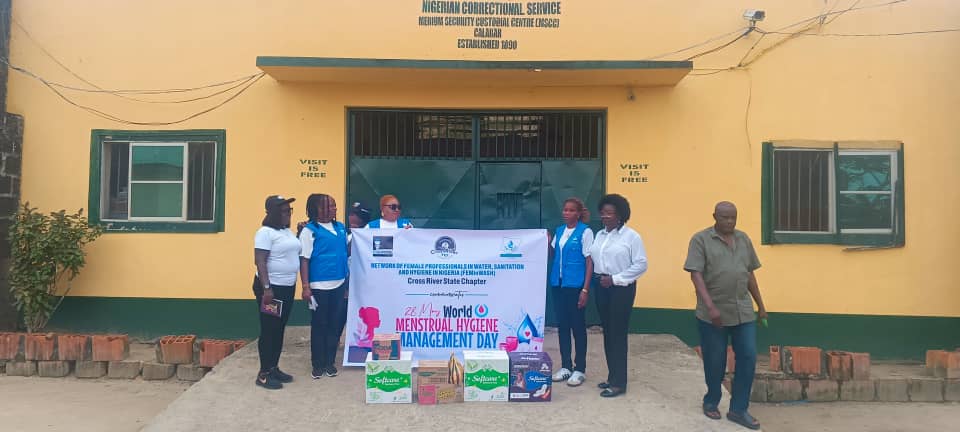

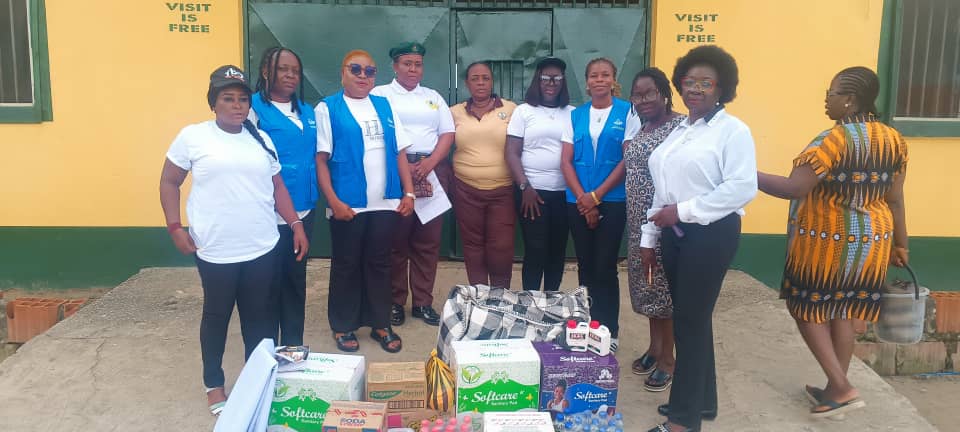
In commemoration of World Mental Hygiene Day, the Female Mentors in Water, Sanitation and Hygiene (FEMinWASH), Cross River State Chapter, carried out a hygiene awareness and sensitization campaign at the Calabar Correctional Centre in Afokang.
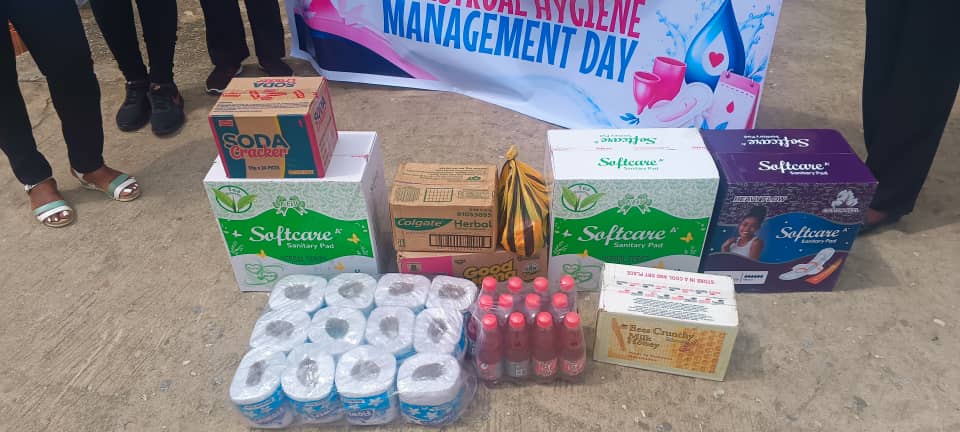
The team also donated sanitary pads and other essential supplies to support Water, Sanitation and Hygiene (WASH) initiatives within the facility alongside beverages.
The outreach, which brought together FEMinWASH members and correctional officials, focused on promoting healthy hygiene practices among inmates and staff to improve health outcomes and foster a more dignified correctional environment.
The FEMinWASH delegation was received by the Gender Desk Officer of the Calabar Custodial Centre, DSC Atana Edet, who took delivery of the items on behalf of the management.
She commended the organization for extending its advocacy and humanitarian efforts to correctional facilities, noting that such interventions significantly contribute to the welfare and rehabilitation of inmates.
Earlier, the Chairperson of the Network of Female Professionals in Water, Sanitation and Hygiene (FEMinWASH), Cross River State Chapter, Sanitarian Ikwo Eyo, emphasized that good hygiene is fundamental to both physical and mental health.
She stated that the event was part of activities marking World Mental Hygiene Day, an opportunity she noted, to raise awareness about the importance of clean environments and healthy practices that enhance self-esteem, dignity, and overall well-being of female inmates.
According to Eyo, correctional centres are important institutions that should not be left behind in public health campaigns, especially those aimed at improving sanitation and hygiene standards. She further highlighted FEMinWASH’s commitment to advancing WASH advocacy across all segments of society, including vulnerable and underserved populations.
As part of the event, the team engaged female inmates and facility personnel in discussions on menstrual and personal hygiene, environmental cleanliness, disease prevention, and the role of sanitation in fostering positive mental health outcomes.
By Nakanda Iyadim